Psychotria viridis


Botany
| Accepted name | Psychotria viridis Ruiz & Pav., 1799 — accepted by Plants of the World Online |
| Original publication | Flora Peruviana, et Chilensis, volume 2, p. 61, plate 210, fig. b (Ruiz and Pavón, 1799). An original expedition drawing by José Brunete survives in Madrid. |
| Family / order | Rubiaceae, subfamily Rubioideae, tribe Psychotrieae · Gentianales. |
| Life form | Evergreen, usually multi-stemmed understorey shrub or small tree, commonly 2–5 m tall. |
| Native range | Humid tropical America: Mesoamerica and the Greater Antilles through northern and western South America, including Amazonian Colombia, Ecuador, Peru, Bolivia and Brazil. It occurs in moist lowland and premontane forest, river terraces and secondary growth. |
| Cultivated range | Widely cultivated in western Amazonian household and specialist gardens, Brazilian religious communities, retreat centres and ethnobotanical collections; established in tropical and frost-free subtropical regions beyond its native range. |
| Local names | Chacruna / chakruna / chacrona in Peru and regional Spanish; chacrona, folha and rainha in Brazilian ayahuasca religions; amiruca / samiruca and oco-yagé occur in some regional literatures but may also name related species. Vernacular names do not guarantee botanical identity. |
| Conservation | Least Concern Assessed as Least Concern on the IUCN Red List, while local wild populations and ritual cultivars remain exposed to habitat conversion and unrecorded trade (Machuca Machuca, 2022). |
Morphology
The plant bears opposite, simple leaves generally 5–15 cm long, elliptic to obovate, with entire margins, acute to acuminate tips and five to ten pairs of secondary veins. Interpetiolar stipules protect each new node; when they fall they leave a transverse scar with a reddish-brown line of hairs. Terminal or subterminal branching inflorescences carry many small, white, tubular five-lobed flowers. The fruits are small drupes that ripen red and contain two grooved pyrenes, each usually enclosing one seed.
Its most useful living diagnostic characters are the foveolae or domatia on the underside of many leaves: narrow pockets beside the midrib, often opening where a secondary vein meets it. These chambers shelter mites and vary in number and form among leaves. They help distinguish chacruna from several traded lookalikes, but no single leaf character is infallible. Flowers, fruits, stipules, micromorphology and authenticated voucher material provide stronger identification, especially for dried or fragmented products (Hamilton, 1989; Kowalczuk et al., 2015).
Related and confused plants
Psychotria is one of the largest angiosperm genera and has proved phylogenetically complex. Organellar-genome analysis places P. viridis within Psychotrieae while confirming that older broad concepts of Psychotria are not a simple monophyletic unit (Varani et al., 2022). Psychotria carthagenensis, frequently called samiruca or amiruca, is a close ritual substitute, but chemical studies report DMT-rich, DMT-poor and DMT-absent material under that name. Diplopterys cabrerana—chaliponga, chagropanga or chagro—is an unrelated Malpighiaceae vine and the major DMT leaf of many Colombian and Ecuadorian yagé preparations.
Commercial fragmentation intensifies ambiguity. A study of material sold as P. viridis found botanical and chemical heterogeneity, including samples without detectable DMT. Chemical detection alone cannot prove the species because DMT occurs in many plants, while morphology alone may fail when leaves are powdered. Forensic and ethnobotanical identification therefore answer different questions: taxon, alkaloid content, provenance and ritual name require separate evidence (Kowalczuk et al., 2015).
Propagation and cultivation
Chacruna is propagated from fresh seed, stem cuttings and, characteristically, leaf cuttings. Adventitious plantlets can arise from wounded leaf veins when a leaf or section is held against moist substrate. Seeds contain an underdeveloped embryo and may germinate slowly; viability declines with poor storage. The shrub favours warmth, humidity, filtered light and freely drained but moisture-retentive soil. It tolerates repeated leaf harvest when plants are established, and pruning encourages branching.
Cultivated lineages vary in leaf shape, domatia, vigour, cold tolerance and chemistry. Full-sun and shade-grown clones show different metabolomic and lipidomic responses, especially among flavonoids, although a 2025 year-round clonal study found no statistically significant DMT difference across its tested seasons and light conditions (Matos et al., 2025). This contrasts with earlier field studies that detected environmental or harvest-related variation, illustrating how genotype and experimental design influence the result (Cavalcante et al., 2018).
Chemistry
Entheogenic & associated compounds
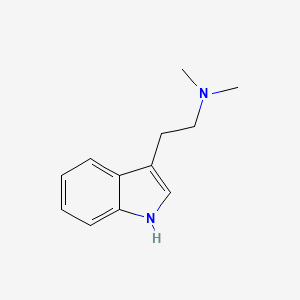
N,N-Dimethyltryptamine

N-Methyltryptamine
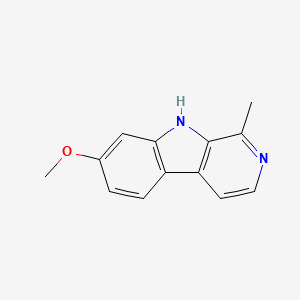
Harmine
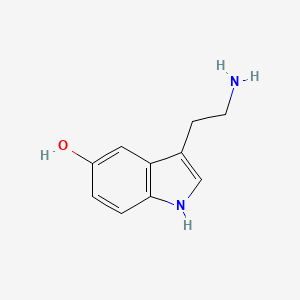
Serotonin
DMT pharmacology
DMT is a tryptamine structurally related to serotonin. Its psychedelic effects are mediated principally by agonism at cortical 5-HT2A receptors, with activity at other serotonin receptors contributing to the total profile. Binding to sigma-1 receptors and trace-amine-associated receptors has been demonstrated in experimental systems, but their importance to human visionary phenomenology remains unresolved (Carbonaro and Gatch, 2016). DMT is rapidly metabolised by monoamine oxidase A to indole-3-acetic acid and other metabolites.
Orally administered DMT is ordinarily inactivated before reaching effective systemic concentrations. Harmine and harmaline from B. caapi reversibly inhibit MAO-A; tetrahydroharmine contributes weaker MAO inhibition and additional serotonergic effects. The paired pharmacology gives chacruna DMT a slower onset and longer active window than inhaled or intravenous DMT, while the β-carbolines contribute their own bodily, oneiric and cognitive effects (McKenna, Towers and Abbott, 1984; Callaway et al., 1999; Riba et al., 2003).
Biosynthesis and leaf chemistry
Plant DMT biosynthesis is generally modelled from tryptophan through decarboxylation to tryptamine, followed by two sequential methylations: tryptamine to N-methyltryptamine and then DMT. The responsible aromatic amino-acid decarboxylase and indolethylamine N-methyltransferase pathways remain active areas of genomic and biochemical study in chacruna. Older analyses also report traces of methyl-tetrahydro-β-carboline and other minor bases, while untargeted work identifies triterpenes, phytosterols, flavonoids and long-chain lipids (Rivier and Lindgren, 1972; Soares et al., 2017; Matos et al., 2025).
Reported DMT concentration varies by individual, provenance, season, cultivation and analytical method. In 36 Brazilian leaf samples collected across 22 sites, some plants contained little or no detectable DMT, while others were appreciably richer (Callaway, Brito and Neves, 2005). Controlled 2025 metabolomics found seasonal change in many flavonoids and energy-related pathways but no statistically significant DMT shift in its clonal population. “Chacruna” therefore does not specify a standard dose or chemical profile.
Preparation as a plant relation
In common Peruvian and Brazilian preparations, fresh or dried leaves are layered or combined with cleaned and pounded caapi stem and repeatedly decocted. Selection may attend to plant lineage, leaf maturity, weather, prayer, ritual calendar and the authority of the person gathering. Santo Daime feitio and União do Vegetal preparations turn harvest, leaf cleaning, pounding, fire tending and reduction into collective liturgical labour. Preparation is simultaneously extraction, social organisation and transmission of doctrine.
DMT source. Authenticated P. viridis commonly contains DMT as its dominant alkaloid, with major quantitative variability among plants and samples.
Paired activation. Caapi β-carbolines permit orally ingested leaf DMT to remain bioavailable long enough to produce sustained psychedelic effects.
Plant versus beverage. Clinical and phenomenological studies usually administer complete ayahuasca or synthetic DMT. They cannot automatically assign every observed effect to chacruna.
Tradition, ritual & cultural use
Oldest evidenced or proposed human use
No archaeological remain has securely identified P. viridis. A c. 905–1170 CE ritual bundle from Cueva del Chileno, Bolivia, contained DMT together with harmine, bufotenine, cocaine and benzoylecgonine, demonstrating an ancient multi-plant psychotropic assemblage (Miller et al., 2019). DMT occurs in numerous South American taxa, so the analysis cannot determine whether chacruna, Diplopterys, Anadenanthera, Virola or another source supplied it. The find does not establish the modern caapi–chacruna recipe.
Ruiz and Pavón formally described the species in 1799 from Peruvian expedition material without recording an entheogenic use. Nineteenth-century descriptions of ayahuasca focused principally on the vine and often failed to identify admixture leaves. The first secure chemical–ethnographic documentation appeared in work with Cashinahua material published by Der Marderosian and colleagues in 1970, followed by Rivier and Lindgren’s 1972 analysis of ayahuasca and its plants among Cashinahua, Sharanahua, Culina and Piro communities. These studies helped establish DMT-bearing Psychotria as one component of western Amazonian preparations (Der Marderosian et al., 1970; Rivier and Lindgren, 1972).
The documentary chronology does not date the beginning of local knowledge. It does show that the geographically widespread caapi–chacruna formula was historically assembled and circulated through Indigenous, riverine, rubber-boom, mission, urban and religious networks. Critical ethnohistory treats present distribution as evidence of successful transmission, not as proof that every contemporary formulation has remained unchanged from pre-Columbian antiquity (Gow, 1994; Brabec de Mori, 2011).
Peoples, territories and traditions
Huni Kuin/Cashinahua, Sharanahua, Culina and related traditions. Mid-twentieth-century ethnography and chemistry documented DMT-bearing Psychotria in beverages used for collective seeing, learning, social knowledge and consultation about distant persons or illness. Huni Kuin nixi pae now circulates through village, urban Indigenous and international ceremonial networks (Der Marderosian et al., 1970; Rivier and Lindgren, 1972).
Shipibo-Konibo oni practice. Chacruna is a common contemporary companion leaf in preparations led by onanya. Vision, bewá song, tobacco smoke, perfume, extraction and protective design form one therapeutic field. Ethnohistorical work indicates that recipes and specialist forms have changed through long exchange with neighbouring peoples, towns, missions and mestizo healers (Gebhart-Sayer, 1985; Brabec de Mori and Mori Silvano de Brabec, 2009).
Mestizo vegetalismo. Chacruna appears as a companion and teacher within ayahuasquero practice. Dietas, tobacco, ícaros, plant baths, perfumes and Catholic prayer create diagnostic and healing settings. Practitioners distinguish named leaf forms and may attribute clarity, colour or visionary light to chacruna (Luna, 1984; Luna, 1986; Beyer, 2009).
Kichwa and neighbouring traditions. P. viridis occurs in some Ecuadorian and Peruvian preparations, but Diplopterys cabrerana and other leaves are also important. “Chacruna” cannot be projected across all yagé or ayahuasca traditions as a universal ingredient.
Rainha and the work of the feitio. The leaf is commonly called rainha, “queen”, and combined with jagube vine to produce daime. Hymn singing, dance formations, uniforms, the central table, celestial and Marian imagery, and collective discipline shape the sacrament’s effects. The preparation work itself transmits hierarchy, gendered offices and religious knowledge (MacRae, 1992; Hartogsohn, 2021).
Chacrona and mariri. UDV prepares hoasca or vegetal from chacrona leaf and mariri vine. Sessions centre spoken doctrine, question and answer, music, mental concentration and the authority of Mestre Gabriel’s teachings. The drink’s burracheira is cultivated as a state of heightened perception and learning (Grob et al., 1996; Labate and MacRae, 2010).
Daime, mediumship and maritime cosmology. Barquinha traditions combine the beverage with Christian devotion, Afro-Brazilian mediumship, healing works and a symbolic boat or barque. Chacrona participates within an institution whose songs, spirit incorporations and charitable works differ from Santo Daime and UDV (Araújo, 2002).
Ritual practice: seeing, diagnosis and healing
In western Amazonian curing, vision is a practical mode of diagnosis. A specialist may perceive pathogenic darts or substances, sorcery, soul loss, broken relations, plant owners or the actions of distant persons. Chacruna’s contribution is often described through illumination: it allows forms to become visible or sharp enough for the healer to inspect and act. Caapi supplies force, depth or command in complementary local formulations. These are emic distinctions that organise practice; chemical analysis describes the same pairing as DMT plus β-carbolines without exhausting its ritual meanings.
Healing proceeds through song, breath, tobacco, perfume, suction, massage, prayer and additional plants. Ícaros or bewá can summon assistance, direct the apparent motion of visions, extract or transform illness, establish arkana protection and close the body after work. Diet and abstention cultivate sensitivity and relations with plant teachers. The authority to interpret what is seen develops through apprenticeship and outcome, not ingestion alone (Luna, 1984; Beyer, 2009; Brabec de Mori, 2009).
Art and material culture
Shipibo-Konibo kené is applied to textiles, ceramics, bodies and architecture and is associated with beauty, ordering and identity. Ayahuasca-related healing accounts connect geometric vision, song and design, yet later Indigenous and ethnomusicological scholarship rejects a simple one-to-one transcription system in which every pattern can be literally sung. Visual and sonic practices correspond through embodied concepts of movement, proportion and efficacy while retaining distinct techniques and histories (Gebhart-Sayer, 1985; Brabec de Mori and Mori Silvano de Brabec, 2009; Belaunde, 2009).
Pablo Amaringo’s paintings offer a mestizo Amazonian archive of the visionary worlds made accessible through ayahuasca. Serpents, plant spirits, mermaids, healers, pathogenic projectiles, celestial cities, doctors, saints and technological craft coexist in densely structured scenes. Luna and Amaringo relate specific images to plant knowledge and ícaros; the paintings document one influential Peruvian visionary repertoire rather than a taxonomic atlas of universal DMT imagery (Luna and Amaringo, 1991).
Brazilian material forms include the cross and star, uniforms, hymnbooks, maracas, the Santo Daime table, UDV salon seating and the collective architecture of the feitio. Each disciplines posture, attention, gender, sequence and memory. Their efficacy is distributed across beverage, body, sound, spatial order and institution.
Cosmology & key terms
The leaf that gives light
A widespread contemporary formulation contrasts the vine’s force with the leaf’s light: caapi establishes the passage or power, while chacruna makes its inhabitants and forms visible. The contrast appears in Peruvian vegetalismo, retreat discourse and Brazilian religion with different theological elaborations. It should be read as a recurrent relational model, not as a single ancient myth shared by all Amazonian peoples. In many Indigenous preparations the principal visionary leaf is another species, and caapi itself may be held to see and teach.
Madres, owners and plant teachers
Vegetalistas describe medicinal plants as having madres, owners or spirits with whom disciplined relations can be established. Chacruna may appear as a woman, voice, luminous presence, patterned domain or teacher of song. Luna’s informants treat the plant’s mother as its living agency and understand songs acquired during diets or visions as evidence of relation (Luna, 1984; Luna, 1986). The botanical shrub, prepared leaf, visionary person and knowledge received from it are distinguishable but mutually implicated.
Rainha, Queen of the Forest and Marian registers
In Santo Daime the chacrona leaf is commonly rainha, queen. The name resonates within a wider cosmology of the Rainha da Floresta, the Virgin of the Conception, the Moon, forest sovereignty and the divine feminine encountered in Mestre Irineu’s foundational narratives. The vine–leaf conjunction is frequently coded as masculine and feminine, joined in the sacrament. Hymns, however, distribute “queen”, “mother”, “forest” and Marian titles across several divine referents; the botanical leaf cannot be reduced to one fixed goddess identity (MacRae, 1992; Groisman, 2000; Barnard, 2014).
Hoasca origins and doctrinal memory
UDV teaching situates mariri and chacrona within sacred histories transmitted orally through Mestre Gabriel’s doctrine. The plants are ingredients and participants in the restoration of primordial knowledge; their union produces vegetal and the state called burracheira. Narrative authority resides in the session, its sequence of calls, questions, teachings and remembered stories. Published summaries necessarily disclose less than the internally transmitted doctrinal system (Labate and MacRae, 2010).
Visionary beings and perspectival worlds
Serpents, jaguars, birds, aquatic people, ancestors and plant owners recur within western Amazonian accounts. Their meaning is not exhausted by resemblance to entoptic forms. Amazonian perspectival ontologies recognise animals and spirits as subjects possessing social worlds and points of view; visionary practice can temporarily alter the participant’s location within this field. The leaf’s “light” therefore reveals agencies and relations, not simply brighter pictures (Viveiros de Castro, 1998; Gearin and Deveney, 2021).
Visionary phenomenology
| Oral ayahuasca onset | Usually 20–60 minutes, with substantial variation from meal, preparation, chemistry and individual metabolism. |
| Primary window | Approximately 2–4 hours of strongest alteration in many caapi–chacruna preparations. |
| Total oral duration | Commonly 4–6 hours, with reflective, sensory or wakeful after-effects extending longer. |
| Isolated inhaled / IV DMT | Onset in seconds and a primary visionary interval often under 20–30 minutes. This modern route-specific profile is not equivalent to drinking chacruna with caapi. |
| Intensity | From subtle colour, pattern and autobiographical imagery to immersive world replacement, loss of ordinary bodily orientation and encounters experienced as autonomous. |
Geometry, radiance and scene formation
Early visual phases commonly contain grids, zigzags, spirals, tessellations, tunnels and rapidly recombining colour. These can overlay the room with open eyes or expand behind closed eyelids. Geometry may acquire depth and become foliage, scales, feathers, architecture or an entry into fully articulated scenes. Participants report exceptional luminosity and detail: surfaces appear internally lit, boundaries pulse, and forms transform without obeying ordinary object permanence (Shanon, 2002).
Complex scenes include forests, rivers, palaces, temples, cities, processions, healing theatres and distant or apparently historical worlds. Serpents, felines, birds, human teachers, ancestors, religious figures, aliens or technological beings may appear as agents rather than passive images. Benny Shanon’s cognitive-phenomenological corpus distinguishes recurrent content from deeper structural changes in agency, identity, time, intentionality and perceived reality. The feeling that one has been shown knowledge—noesis—is a central phenomenological fact even when the external truth of the content remains a separate question (Shanon, 2002).
Plant attribution within a compound experience
Practitioners often attribute visual brightness, colour, specificity and disclosure to chacruna, while caapi supplies bodily force, rhythm, depth or teaching. Laboratory pharmacology supports DMT’s major contribution to complex visual imagery, yet the orally active state depends on β-carbolines and unfolds more slowly than isolated DMT. Songs, darkness, posture, group expectation and the chemical ratio all affect whether experience remains geometric, becomes narrative or is organised as diagnosis.
Chacruna alone, swallowed without MAO-A inhibition, does not reliably reproduce ayahuasca’s visionary syndrome because its DMT is rapidly metabolised. Conversely, caapi-only preparations can be psychoactive and visionary. The phenomenological distinction is therefore relational rather than a division between an active leaf and inactive vine.
Sound, body and healing action
Music can appear to draw lines through visual space, change colours, rotate patterned fields or call a new scene into view. In Shipibo-Konibo and vegetalista work, this coupling is understood as skilled action: the healer observes a patient and adjusts song, breath, tobacco and perfume. In Santo Daime, repeated hymns, maracá pulse and coordinated dance sustain attention and social order; UDV privileges seated concentration, speech and carefully timed recorded music. Different institutions produce different trajectories from overlapping chemistry (Hartogsohn, 2021).
The bodily field includes pressure, vibration, warmth and cold, altered balance, salivation, sweating, tremor and gastrointestinal urgency. Vomiting can be experienced as expulsion of illness, moral burden or intrusive force. Fear may change abruptly into relief, beauty or affection; autobiographical memory can carry unusual immediacy and moral weight. Other episodes involve apparent death, rebirth, dismemberment, identification with animals or plants, and loss of the ordinary boundary between self and world.
> The Antipodes of the mind reveal a geography that is much more amazing.
Radiant complexity. Fine geometry, saturated colour and internally luminous scenes are among the most stable descriptive themes in DMT-rich ayahuasca reports.
Music–vision coupling. Visual motion and affect commonly change with song; ceremonial specialists use this coupling diagnostically and therapeutically.
Chacruna-specific content. No controlled design can assign serpents, cities or entities to the leaf independently of caapi, participant and cultural setting.
Contemporary status
Contemporary expressions and economies
Chacruna remains a living ritual crop in Indigenous territories, mestizo healing centres, Santo Daime, União do Vegetal and Barquinha communities. Its cultivation now extends through urban gardens, church plantations and retreat-centre supply networks. Leaves circulate fresh, dried, refrigerated or as prepared beverage; value is created through horticulture, harvest, cooking, ceremony, music, accommodation and claims of lineage. Because leaf mass is repeatedly renewable and the shrub grows readily from cuttings, supply dynamics differ from harvesting decades-old wild caapi stems.
Transnational ayahuasca has brought chacruna into botanical collections and commercial nurseries far beyond Amazonia. It has also created new hybrids, selected clones and cultivation research. Public commerce often collapses chacruna, P. carthagenensis, “Nexus” hybrids and other Psychotria into chemical commodities. Authenticated community cultivation preserves a different set of values: named lineage, known effects, ritual provenance and continuity of collective preparation.
Conservation and biocultural continuity
The IUCN assessment of Least Concern reflects the species’ broad range and current global extinction risk, not the condition of every population. Deforestation, forest fragmentation and conversion of river terraces can remove wild stands. Cultivation reduces direct pressure, but cloned gardens can narrow genetic diversity and detach plants from the ecologies, languages and practices through which local kinds are recognised (Machuca Machuca, 2022; Ermakova et al., 2025).
Research priorities include population genetics, verified living collections, cultivar documentation and the conservation of related admixture species. The 2022 plastid and mitochondrial genomes provide tools for phylogeny and identification, while tissue-culture systems offer ex-situ propagation. Neither substitutes for in-situ habitat or community-held horticultural knowledge (Varani et al., 2022; Andrade et al., 2025).
Legality
DMT is listed in Schedule I of the 1971 UN Convention on Psychotropic Substances. The living plant is not separately listed by that convention, and international control of a pure compound does not automatically settle the legal status of every DMT-bearing plant or decoction. National laws differ sharply: some name P. viridis, some treat leaf material or ayahuasca as a DMT preparation, and others recognise specified Indigenous or religious use. France and Poland have explicitly controlled the plant; in the United Kingdom a DMT-containing preparation is exposed to Class A controls.
Brazil regulates religious ayahuasca practice through CONAD Resolution No. 1 of 2010. Peru’s 2008 cultural-heritage declaration protects the traditional knowledge and uses of ayahuasca among native Amazonian communities. In the United States, Gonzales v. O Centro (2006) and subsequent church agreements created fact-specific religious protections, not a general national exemption for DMT-containing leaf or beverage (Labate and Feeney, 2012).
Patents and pharmaceutical translation
No prominent modern plant patent comparable to the “Da Vine” caapi case centres on P. viridis. Patent activity instead claims synthetic DMT compositions, salts, delivery systems, controlled infusions, deuterated analogues and oral or transmucosal combinations with MAO inhibitors. US11602521B2 concerns DMT compositions and methods; WO2021259962A1 claims combinations and kits involving DMT and β-carbolines, including plant-source examples. Such claims generally concern formulations or methods rather than ownership of chacruna as a species.
The distinction matters scientifically and legally. Pharmaceutical DMT can be chemically identical to a plant alkaloid while differing in route, duration, accompanying β-carbolines, intellectual history and therapeutic institution. Patent novelty is assessed through claims and prior art; it does not by itself recognise the full ethnobotanical system that made oral DMT combinations historically visible.
Latest research: plant systems, brains and clinics
First genomic resources. The complete chloroplast and mitochondrial genomes clarified placement within Psychotrieae and supplied markers for future taxonomy and authentication (Varani et al., 2022).
Season and cultivation. A 2025 clonal study found strong seasonal or light-related variation in flavonoids, lipids and carbohydrate pathways, but no significant DMT difference under its tested conditions (Matos et al., 2025).
Callus and regeneration. Andrade et al. (2025) established callus culture, plantlet regeneration and in-vitro DMT production, with temporary-immersion plantlets surviving acclimatisation. This creates research and propagation capacity rather than a clinical product.
Cell and animal models. DMT promotes structural and functional neural plasticity in experimental systems. Translation to lasting human therapeutic change remains under study and cannot be inferred directly from cultured neurons (Ly et al., 2018).
Synthetic intravenous DMT. A 2026 phase IIa trial in 34 adults found a rapid reduction in depressive symptoms after one supported IV DMT session, with effects sustained during follow-up. It studied a standardised pharmaceutical route, not chacruna or ayahuasca (Erritzoe et al., 2026).
Large-scale connectivity. A 2026 international mega-analysis integrated 11 datasets across DMT, ayahuasca and other psychedelics and found increased coupling between transmodal and sensory networks alongside drug-specific variability (Girn et al., 2026).
Bibliography
Archaeology & history
Art, music & material culture
Botany & taxonomy
Chemistry & pharmacology
Clinical research & neuroscience
Ethnography, ritual & cosmology
Law, policy & patents
Visionary phenomenology
Cross-correlations
| Kingdom / ecology | Plantae · humid-forest understorey shrub · Rubiaceae · leaf- and seed-propagated ritual crop |
| Principal compound | N,N-dimethyltryptamine ↳ orally activated in many preparations by caapi β-carbolines |
| Primary companion | Banisteriopsis caapi · related alternatives include Psychotria carthagenensis and Diplopterys cabrerana |
| Cultural complexes | Huni Kuin nixi pae · Shipibo-Konibo oni · Peruvian vegetalismo · Santo Daime · União do Vegetal · Barquinha · transnational ayahuasca |
| Ritual associations | Visionary light · diagnosis · plant teaching · song · kené · Rainha · collective feitio · burracheira · visionary painting |
| Linked species | Banisteriopsis caapi · Psychotria carthagenensis · Diplopterys cabrerana · Nicotiana rustica · Brugmansia spp. |