Banisteriopsis caapi


Botany
| Accepted name | Banisteriopsis caapi (Spruce ex Griseb.) C.V.Morton, 1931 — accepted by Plants of the World Online |
| Basionym | Banisteria caapi Spruce ex Griseb., published in Flora Brasiliensis 12(1): 43 (1858). Spruce collected and described the plant in 1851; Morton transferred it to Banisteriopsis in 1931. |
| Synonymy | Names placed in synonymy include Banisteriopsis inebrians C.V.Morton and Banisteriopsis quitensis (Nied.) C.V.Morton. Both B. caapi and B. quitensis were lectotypified in 2021, clarifying a nomenclatural history complicated by cultivated material and incomplete early collections (Oliveira et al., 2021). |
| Family / order | Malpighiaceae · Malpighiales. |
| Life form | Long-lived woody climber or liana, ascending into the forest canopy; cultivated plants are commonly coppiced and maintained as lower tangles of harvestable stems. |
| Native range | Tropical South America, centred on the Amazon and Orinoco basins and adjoining Andean piedmont. Kew records the species from southern tropical America in the wet tropical biome; Colombian records span Amazonian, Andean, Orinoquian and Pacific regions and 100–2,200 m elevation, but cultivation and long-distance exchange make the pre-cultivation range difficult to reconstruct. |
| Cultivated range | Widely planted in Amazonian gardens, religious communities and ethnobotanical collections; now cultivated in suitable tropical and subtropical climates beyond South America. |
| Local names | Ayahuasca / ayawaska (Quechua and regional Spanish); yagé / yajé (Colombia–Ecuador); caapi / kahpi / gaapi (north-west Amazon); oni (Shipibo-Konibo term commonly applied to the medicine); nixi pae (Huni Kuin); uni (Yawanawá); natem (Shuar–Achuar); kamarampi (Asháninka); mariri, jagube, hoasca and vegetal in Brazilian religious settings. Names may denote the vine, the finished beverage, a class of preparations or the ceremonial institution; their referents extend beyond formal botanical taxonomy. |
| Conservation | Not globally assessed No global IUCN Red List assessment located. A 2024 model in Plants of the World Online predicts the species as not threatened, but this is not an IUCN assessment and does not measure local depletion, loss of old lianas or erosion of named cultivated diversity. |
Morphology
Mature stems can exceed 10 cm in diameter and climb 20–30 m. Older bark is chocolate- to grey-brown, becoming longitudinally fissured; transverse cuts expose a conspicuous rosette or flower-like wood pattern. This anomalous secondary growth reflects successive cambia that produce repeated xylem and phloem sectors, a liana architecture that combines conduction, flexibility and the capacity to survive twisting. The cambial pattern is also practically important because scraped or split stem and cambial tissues are the parts most commonly decocted.
Branches bear opposite, simple, entire leaves, broadly ovate to elliptic, commonly about 8–18 cm long and 3.5–8 cm wide, with an acuminate apex and rounded to cordate base. The upper surface becomes glabrous; young axes and lower surfaces may retain appressed hairs. Axillary or terminal cymose panicles carry small flowers approximately 12–14 mm across. Like other Malpighiaceae, each flower has five sepals, usually bearing paired oil glands, five clawed pale-pink petals that may fade towards white or cream, ten stamens and a three-carpellate ovary. The schizocarp separates into three one-seeded samaras whose enlarged dorsal wings assist wind dispersal.
The rosette stem is an important field character, but it is not by itself species-diagnostic. Vernacular identification also attends to bark colour, nodes, internode length, leaf texture, bitterness, habitat, brew colour and experienced effects. Related Malpighiaceae enter some local preparations, and commercial stem fragments may be impossible to identify securely without leaves, flowers, provenance or molecular evidence. Diplopterys cabrerana, a frequent DMT-bearing companion in Colombian and Ecuadorian yagé, belongs to the same family but is botanically and chemically distinct; Banisteriopsis muricata and other lianas are likewise traded under overlapping vernacular names.
Propagation, cultivars and local classification
Cultivation is principally vegetative. Sections of stem are planted horizontally or obliquely in moist soil and allowed to root at nodes; this preserves named horticultural forms and rapidly produces material with known ritual qualities. Flowering and viable seed occur, but clonal propagation dominates managed populations. Repeated cutting induces coppice shoots, yet ecological work in Peru shows that compensatory clonal growth did not prevent decline under heavy forest harvesting (Coe and Gaoue, 2023).
Practitioners distinguish numerous kinds—among them cielo, trueno, tucunacá, ayahuasca negra, amarilla, roja and blanca. These categories can encode stem colour, growth form, strength, spirit relations, visionary signature or lineage of cultivation. They do not map consistently onto formal botanical varieties. Chemical surveys likewise find substantial variation in harmine, harmaline and tetrahydroharmine among samples, so emic kind, genotype and alkaloid profile are overlapping questions rather than interchangeable labels (Santos et al., 2020).
The Brazilian names tucunacá and caupuri often contrast smoother stems with conspicuously knotted or swollen nodes, but usage differs among churches and regions. Among Piaroa/Wõthïhã practitioners in southern Venezuela, at least five caapi varieties are distinguished and the cambium may be separated for use without a DMT-bearing leaf. Such classifications are operational bodies of horticultural, sensory and ceremonial knowledge, not failed versions of Linnaean taxonomy (Rodd, 2008).
Molecular studies complicate any simple opposition between “folk kind” and biological variation. Plastid barcodes have had limited power to separate ethnovarieties, whereas nuclear ITS variation has recovered some corresponding lineages; a complete mitochondrial genome has been published for a morphologically identified tucunacá plant. A 2026 image-analysis study could recover parts of folk classification from herbarium-leaf features, while population work on southern-Amazonian tucunacá found geographically structured genetic diversity. Together these studies support integrative identification—voucher specimens, local names, morphology, chemistry and genetic markers—rather than allowing any one measure to displace the others (Luz, Cunha-Machado and Batista, 2023; Chavarro-Mesa et al., 2024; Biazatti et al., 2026; Carvalho et al., 2026).
Chemistry
Entheogenic & associated compounds
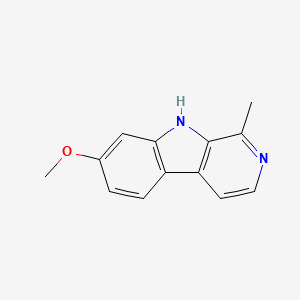
Harmine

Tetrahydroharmine

Harmaline
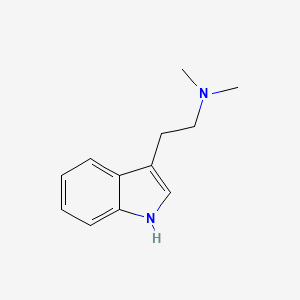
N,N-Dimethyltryptamine
β-carbolines and oral DMT activity
Harmine and harmaline reversibly inhibit monoamine oxidase A (MAO-A). DMT is normally deaminated rapidly in the intestinal wall and liver; when a DMT-bearing leaf such as Psychotria viridis or Diplopterys cabrerana is combined with sufficient caapi alkaloids, first-pass metabolism is reduced and DMT reaches systemic circulation. Human pharmacokinetic studies identify DMT, harmine, harmaline and tetrahydroharmine in plasma after hoasca ingestion and show different time courses for each constituent (Callaway et al., 1996; Callaway et al., 1999; Riba et al., 2003).
The interaction is selective rather than equivalent to permanent or non-selective MAO inhibition. Harmine and harmaline inhibit MAO-A more potently than MAO-B and are cleared on the scale of hours, while DMT’s oral exposure depends on the quantity and timing of both alkaloid classes. In a 15-person ceremonial pharmacokinetic study, mean DMT time to peak plasma concentration was about 108 minutes; tetrahydroharmine followed a more independent and prolonged profile (Callaway et al., 1999). Controlled freeze-dried ayahuasca dosing likewise placed peak DMT and subjective effects near 1.5 hours (Riba et al., 2003). These data describe the analysed preparations, not a universal dose curve for every decoction.
This interaction is central to many ayahuasca formulations, but the vine is not chemically inert and DMT is not universal. Caapi-only drinks are documented, and some north-west Amazonian preparations privilege β-carboline-rich vines or other admixtures. Harmine and harmaline cross the blood–brain barrier and contribute oneiric imagery, auditory alteration, motor slowing, tremor and nausea; tetrahydroharmine has weaker MAO-A activity and a longer pharmacokinetic profile. Minor alkaloids include harmol, harmalol and related tetrahydro-β-carbolines (McKenna, Towers and Abbott, 1984; Wang et al., 2010).
Tetrahydroharmine is often described as a serotonin-reuptake inhibitor, but the evidence is substantially stronger in vitro than in humans. The three major alkaloids also interact with targets studied in relation to dopamine metabolism, imidazoline binding, oxidative stress and neuroinflammation; the therapeutic significance of these secondary mechanisms remains unestablished. Caapi extracts additionally contain proanthocyanidins and flavan-3-ols, including epicatechin and procyanidin B2, so neither the vine nor a whole decoction can be represented by four isolated alkaloids alone (Samoylenko et al., 2010; Wang et al., 2010).
Chemical variability and preparation
Alkaloid concentration varies with plant, clone, organ, age, season, provenance, storage and extraction. In a large Brazilian survey, analysed beverages ranged from 0.109 to 7.11 mg/mL harmine, 0.012 to 0.945 mg/mL harmaline, 0.09 to 3.05 mg/mL tetrahydroharmine and 0.10 to 3.12 mg/mL DMT. Native vine samples contained more harmine on average than cultivated samples, while regional differences appeared in tetrahydroharmine. The ranges overlapped and do not license prediction of chemistry from geography or name alone (Santos et al., 2020).
Preparation itself changes the measured material. Paired vine-and-brew profiles are consistent with partial conversion of harmine through harmaline towards tetrahydroharmine during cooking, and prolonged heating, acidity, concentration, fermentation and storage can alter ratios. A study of 29 caapi decoctions found considerable between- and within-source variability, with DMT absent from some finished samples and one acidic sample becoming neutral through fermentation after about 50 days (Callaway, 2005b). Colour, thickness, regional label and recipe name provide insufficient grounds for chemical standardisation.
In Amazonian practice, pounding, splitting or scraping the stem and prolonged aqueous decoction are common, while cold maceration, cambium-only use, chewing and differently reduced concentrates are also documented. The species, organ, age and proportion of companion plants differ by region, lineage and purpose. These procedures are pharmacological operations and ritual acts embedded in rules of collection, speech, diet, gendered labour, reciprocity and custodianship.
Reversible MAO-A inhibition. Harmine and harmaline account for the best-established mechanism by which many caapi preparations make companion-plant DMT orally active.
Vine-specific psychoactivity. β-carbolines have central and peripheral effects of their own, and caapi-only preparations are pharmacologically active.
Chemotype and named kind. Horticultural names may correlate with lineage, morphology, chemistry or ritual effect, but no universal conversion table exists.
More than an “MAOI plant”. Reversible MAO-A inhibition is decisive in DMT-containing brews, yet vine-only use, minor alkaloids, polyphenols and culturally specific applications exceed that single biochemical role.
Tetrahydroharmine mechanism. Serotonin-reuptake effects are supported experimentally, but their magnitude and experiential contribution in humans remain insufficiently isolated from harmine, harmaline and DMT.
Tradition, ritual & cultural use
Scope: caapi, companion plants and the synergistic brew
This is a species archive for Banisteriopsis caapi, but much of the historical, ceremonial, cosmological and phenomenological record concerns preparations in which the vine is combined with another plant. In the Peruvian and Brazilian complexes most familiar in contemporary literature, stems of B. caapi are decocted with leaves of Psychotria viridis. In many Colombian and Ecuadorian yagé traditions, Diplopterys cabrerana supplies the principal DMT-bearing leaf. Psychotria carthagenensis and numerous local admixtures also occur. “Ayahuasca”, “yagé”, oni, natem, nixi pae, daime, hoasca and related names may denote the vine, a particular recipe, a wider class of drinks or the ceremonial institution organised around them.
The best-established pharmacological synergy joins β-carbolines from caapi with N,N-dimethyltryptamine from a companion plant. Harmine and harmaline reversibly inhibit monoamine oxidase A in the gut and liver, reducing the rapid first-pass metabolism that ordinarily limits oral DMT exposure. Tetrahydroharmine contributes a longer-lived β-carboline component with weaker MAO-A inhibition and other incompletely resolved actions. The resulting drink is not equivalent to either plant in isolation: its onset, duration, somatic load, imagery and affect emerge from interacting alkaloids whose concentrations differ substantially among vines, leaves, recipes and servings (Rivier and Lindgren, 1972; McKenna, Towers and Abbott, 1984; Callaway et al., 1999; Riba et al., 2003).
The paired formula is common rather than universal. Caapi is psychoactive in its own right and is consumed without a DMT-bearing leaf in documented Piaroa/Wõthïhã and north-west Amazonian practices. Some preparations combine it with tobacco, Justicia, Brugmansia, Brunfelsia, gingers, sedges, aromatic plants or locally classified medicines; some contain Diplopterys cabrerana, whose leaves supply DMT while its lianescent form and membership of Malpighiaceae give it a different botanical relationship to caapi from that of Psychotria. Recipes can be caapi-dominant, admixture-rich, weakly visionary, strongly emetic, stimulating or directed towards a named diagnostic, hunting or initiatory task. “Two-plant brew” identifies a pharmacological centre of gravity without exhausting the ayahuasca complex.
The traditions described below consequently concern several overlapping objects. Accounts of horticultural varieties, cambium use, vine-only ingestion and β-carboline-dominant effects can be attributed directly to caapi. Accounts of sustained geometric imagery, immersive visionary scenes, DMT pharmacokinetics and most controlled human studies concern mixed ayahuasca, commonly caapi plus P. viridis. Accounts of song, diagnosis, plant persons, dieta, purging and ritual authority concern a ceremonial assemblage in which beverage chemistry, other medicines, specialist knowledge, social relations, sensory direction and local cosmology act together. The archive specifies vine-only evidence where it exists and treats brew-level findings as evidence about caapi in combination.
This distinction is especially important in the phenomenology section. Benny Shanon’s corpus, the paintings of Pablo Amaringo, clinical studies of hoasca and many ethnographic descriptions concern complete drinks rather than isolated caapi alkaloids. Their serpents, cities, geometric fields, voices and immersive scenes cannot be assigned to the vine alone. Conversely, describing ayahuasca as oral DMT leaves out the vine’s dreamlike, auditory, emetic, motor and affective contribution, as well as the cultural priority granted to caapi as the organising or teaching plant. The comparison is between interacting profiles, not between an “active” leaf and an inert delivery mechanism.
Throughout the tradition, cosmology and phenomenology sections, caapi refers to the botanical vine or a vine-dominant preparation; ayahuasca and yagé refer to culturally named drinks whose composition must be established from context. Where a source does not report a recipe, the term used by that source is retained and the chemical composition remains undetermined.
Oldest evidenced or proposed human use
A ritual bundle from Cueva del Chileno in south-western Bolivia, dated to approximately 905–1170 CE, contained chemical evidence for harmine, DMT, bufotenine, cocaine and benzoylecgonine. The combination demonstrates specialist knowledge of several psychoactive plants and long-distance botanical networks a millennium ago (Miller et al., 2019). Harmine is consistent with B. caapi, yet it is not species-specific and no caapi macroremain was recovered. The bundle establishes an ancient harmine-bearing psychotropic assemblage; identification of the vine and reconstruction of a brewed ayahuasca recipe remain unverified.
Other Andean finds have detected harmine or harmaline in hair and nails from Azapa, Nazca and Inca-period individuals. These discoveries expand the history of β-carboline exposure, but they remain analytically and botanically equivocal. Harmine also occurs in South American Passiflora, Simira, tobacco, Oxalis tuberosa and other plants; hair can be affected by dyes, burial chemistry and laboratory matrix effects. Greco et al. (2024) interpret archaeological β-carbolines as molecular evidence with multiple possible sources; species-level assignment to B. caapi requires additional evidence.
Claims extending ayahuasca to decorated Ecuadorian vessels of c. 2400 BCE are weaker still: vessel form and iconography do not identify their contents. The chronology contains several evidentiary thresholds: ancient psychoactive-plant use, ancient harmine exposure, a possible ayahuasca-like combination, historically named drinks and botanically vouchered B. caapi.
Richard Spruce’s 1851 encounter with Tukanoan caapi use on the Rio Vaupés produced the first secure botanical collection. He named the liana Banisteria caapi and preserved material later confirmed chemically to contain harmine. Manuel Villavicencio described Ecuadorian ayahuasca in 1858, including vivid altered perception. Earlier missionary reports describe powerful Amazonian drinks, divination and condemnation as “diabolical”, but their plant identities are frequently indeterminate (Spruce, 1908; Schultes and Raffauf, 1992).
Jesuit texts from the eighteenth-century Mainas missions provide firmer named historical evidence than generic sixteenth- or seventeenth-century denunciations. Juan Magnin referred in 1740 to ayahuasca among Jivaroan peoples, while Franz Xaver Veigl’s 1768 account described a bitter liana associated with divination and sorcery. The record remains uneven because missionaries grouped distinct practices under Christian categories and rarely preserved botanical vouchers (Lima, 2023).
The geographical age of particular ceremonial complexes is actively debated. One influential ethnohistory proposes that present-day Ucayali ayahuasca shamanism was substantially reorganised and diffused through missions, river towns and rubber-boom mobility; Suárez-Álvarez (2023) re-examines the same sources and argues for greater antiquity among Shipibo-Konibo specialists. The evidence supports historical transformation and interethnic exchange, but not a single uncontested birthplace or date for all caapi traditions.
Peoples, territories and traditions
Eastern Tukanoan and neighbouring peoples. Tukano, Desana, Barasana, Makuna, Cubeo and related communities use caapi/yajé within systems of initiation, male ceremonial knowledge, recitation, music and travel through ancestral layers of the cosmos. Ritual forms and gender participation vary by people and historical moment (Reichel-Dolmatoff, 1971; Hugh-Jones, 1979).
Siona, Cofán/A’i, Inga and Kamëntsá yagé traditions. Specialist authority develops through repeated ingestion, apprenticeship, plant knowledge and mastery of visionary domains. Yagé is used to diagnose illness, locate agents of harm, negotiate with powerful beings and establish the truth of an event. Siona accounts show that visions are patterned through named domains and culturally learned interpretation (Langdon, 1979).
Piaroa/Wõthïhã caapi traditions. Practitioners distinguish at least five vine kinds and may prepare cambium without a DMT-bearing leaf. Reported uses include shamanic training, intensification of empathy, stimulation and hunting, giving caapi a range of functions beyond enabling oral DMT (Rodd, 2008).
Kichwa, Shuar and Achuar traditions. Kichwa yachak and Shuar–Achuar uwishin work with ayahuasca or natem in healing, divination, hunting, warfare histories and relations with spirit powers. Techniques include tobacco blowing, chanting, sucking or extracting pathogenic substances and discerning sorcery or broken relations (Harner, 1972; Taylor, 1993).
Shipibo-Konibo oni traditions. Onanya diagnose and treat through nocturnal ceremony, vocal performance, tobacco smoke, fragrant plants, blowing and protective work. Song, bodily sensation, geometric design and the regulation of social relations form a connected therapeutic field, while local accounts distinguish levels and kinds of specialist knowledge (Gebhart-Sayer, 1985; Brabec de Mori and Mori Silvano de Brabec, 2009).
Asháninka and neighbouring peoples. Kamarampi occurs within kinship, warfare, hunting and curing histories and has travelled through interethnic networks. The vine’s meaning is constituted by local language and practice rather than by one pan-Amazonian ceremonial script.
Huni Kuin and neighbouring Panoan traditions. Huni Kuin nixi pae is organised through bodies of huni meka song, narratives of the anaconda and techniques for calling, sustaining and lowering the medicine’s force. Yaminahua song paths likewise use dense metaphor or “twisted language” as a practical way of perceiving relations among humans, animals and spirit agencies (Townsley, 1993; Mattos and Huni Kuin, 2017).
Mestizo vegetalismo. Urban and rural vegetalistas combine Indigenous, Catholic, African, Andean and esoteric repertoires. Plants are teachers; apprenticeship may involve restrictive dietas, solitude and dream learning. Ícaros, tobacco, perfumes, suction and protective arkana organise diagnosis and cure (Luna, 1984; Luna, 1986; Beyer, 2009).
Santo Daime, União do Vegetal and Barquinha. Twentieth-century Amazonian religions established liturgical systems around daime, hoasca or vegetal. Hymnals, uniforms, Christian and Afro-Brazilian cosmologies, disciplined bodily formations and institutional preparation distinguish these traditions from Indigenous yagé and mestizo curing ceremonies (Labate and MacRae, 2010).
Ritual practice: shamanism, diagnosis and healing
“Shamanism” is a comparative category covering locally named specialists whose powers, moral evaluations and social positions differ. Amazonian nomenclatures classify practitioners by source of knowledge, technical medium, field of action, degree of mastery, ritual responsibility and reputation. The resulting terms are neither synonyms nor names for a single institution. Some denote a broad vocation; some identify a plant or technique; some indicate seniority; others distinguish curing, sorcery, blessing, dance leadership, protection, divination or the government of collective ritual.
Across the Spanish-speaking Upper Amazon, curandero or curandera, médico or médica, and maestro or maestra function as broad titles whose scope depends on speaker and setting. In Peruvian mestizo vegetalismo, a vegetalista is distinguished by knowledge acquired through relationships with plants, commonly cultivated through dieta, dream, song and apprenticeship. More specific names foreground a principal medium or teacher: an ayahuasquero or purguero works especially with ayahuasca or purga; a tabaquero with tobacco; a palero with the large trees and woody medicines called palos; a perfumero with fragrant plants, floral waters and commercial perfumes; a toero with toé (Brugmansia spp.); a catahuero with catahua (Hura crepitans); a camalonguero with camalonga; and a traguero with cane alcohol and preparations based upon it. These are overlapping specialisms. One practitioner may be described by a compound designation such as ayahuasquero palero, or may acquire several repertoires over a career (Luna, 1984; Luna, 1986; Beyer, 2009).
Banco belongs to a different order of classification. In northern Peruvian mestizo usage it is an honorific for a practitioner credited with exceptional stability, knowledge and command, as in banco ayahuasquero; the word does not identify a particular plant speciality. Accounts of bancos describe a specialist capable of remaining seated and in control amid dangerous visionary or sorcerous encounters, receiving spirits or voices, diagnosing concealed causes and protecting a session. The title is conferred through recognition by patients, peers and communities rather than through a uniform credential, and its use varies between local networks (Luna, 1986; Beyer, 2009; Marcus, 2022).
Indigenous titles organise expertise through other linguistic and social distinctions. Shipibo-Konibo sources use onanya, often written onaya, for a knowledgeable healer and meraya for a specialist associated with encounter and communication across ordinarily separated domains; the terms derive from verbs of knowing and meeting, and their relative scope has changed with missionisation, urbanisation and the contemporary ayahuasca economy. Among Napo Runa and other Ecuadorian Kichwa speakers, yachak (plural yachakuna) means “one who knows” or “one with power” and can designate women as well as men. Achuar and Shuar uwishin work through natem, song, helper beings and stocks of tsentsak darts; the same capacities may cure, defend or attack, so an uwishin is evaluated through conduct, alliances and the history of particular cases rather than through an intrinsically benevolent office (Taylor, 2014; Uzendoski and Calapucha-Tapuy, 2012; Suárez-Álvarez, 2023; Watanabe, 2025).
Regional lingua francas and colonial languages add further layers. Pajé in Brazilian Portuguese and payé in parts of Colombia and Venezuela are supra-local titles, historically related to Tupi usage, which may translate several Indigenous offices without preserving their internal distinctions. Among the Siona, the Quechua-derived curaca has named a recognised yagé specialist and community authority, while rau refers to the embodied power through which relations with human and nonhuman agents are negotiated. In eastern Tukanoan societies of the Upper Rio Negro and Vaupés, ritual work may be distributed among a kumu, who recites, blesses and coordinates major ritual processes; a bayá, who leads dance-song and handles ceremonial regalia; and yai specialists associated with diagnosis, suction, defence and attack. One person can combine offices, while in other settings they are complementary positions held by different people. Translating each as “shaman” conceals a regional political and ritual division of labour (Hugh-Jones, 1979; Langdon, 1979; Langdon, 2017; Cayón, 2020; Gearin and Calavia Sáez, 2021).
Initiation often requires repeated ingestion, dietary restrictions, sexual abstinence, seclusion, tobacco and apprenticeship to senior practitioners. In vegetalismo a plant’s knowledge may be received in dreams, visions or songs during a dieta. Among Siona, mastery depends on learning to recognise, traverse and control yagé realms; among Shipibo-Konibo, knowledge is demonstrated in the effective ordering of song, body, space and relations. A title becomes credible through performed efficacy, disciplined conduct, acknowledged instruction and the practitioner’s history of relations with patients, kin, rivals, plants and nonhuman allies (Langdon, 1979; Luna, 1984; Brabec de Mori, 2013).
A dieta may establish a prolonged relationship with a plant through ingestion or bathing, restrictions on salt, sugar, fat, spice, alcohol and social or sexual contact, and subsequent rules for reopening ordinary life. Dietas can train hunting, artistic, obstetric and practical capacities and may be prescribed without ayahuasca. In traditional Shipibo-Konibo curing documented by Brabec de Mori, the specialist drank a modest quantity to “open the world” while the patient remained sober. Ceremonies in which every participant drinks represent a different, historically situated arrangement (Brabec de Mori, 2021).
Illness may be understood as an intrusive dart or substance, soul loss, contamination, sorcery, a damaged kin relation, violation of dietary rules, or disturbance in relations with plant and animal beings. The healer sees or feels the condition, identifies its agency and acts through singing, blowing smoke or perfume, sucking, massage, prayer and plant remedies. Vomiting and diarrhoea can be interpreted as evacuation of pathogenic matter or moral-affective burden. These meanings coexist with the drink’s emetic and autonomic pharmacology.
Caapi sessions can also address collective questions: hunting, weather, warfare, ancestral transmission, territory, reconciliation, accusation and the moral state of relations. “Healing” spans bodily relief, the removal of aggressive agency, restoration of sociality and the acquisition of knowledge. Biomedical treatment and private psychological insight each describe part of this wider semantic field.
Song, voice and the ceremonial sensorium
Songs are techniques of action. An ícaro, Shipibo-Konibo bewá, Kichwa chant or Santo Daime hymn can call a plant or spirit, establish protection, diagnose, direct visions, extract harm, calm fear, close the body or coordinate a congregation. Melody, timbre, breath, lexical content and the singer’s acquired power are all relevant. Brabec de Mori’s work treats voice as a medium that transforms bodily and social states, while Luna’s vegetalistas describe songs as received from plant teachers (Luna, 1984; Brabec de Mori, 2012; Beyer, 2009).
Different repertoires organise efficacy differently. Yaminahua songs establish shifting analogies through metaphor; Shipibo-Konibo songs may name paths, designs, fragrances, weapons and nonhuman allies; huni meka sequences call and regulate the force of nixi pae; Santo Daime hymns coordinate collective singing, maracá rhythm and prescribed dance formations. The category ícaro is specific to mestizo Peruvian usage and differs from these other poetic, linguistic and institutional forms (Townsley, 1993; Brabec de Mori, 2012; Mattos and Huni Kuin, 2017).
Ceremony is multisensory: darkness makes faint imagery salient; tobacco smoke and floral perfumes mark boundaries and agencies; rattles and leaf-bundles articulate pulse; bodily proximity distributes fear and care. Music can alter the apparent movement, colour and emotional valence of visions. Its therapeutic role operates through performance and relations among singer, participants, medicine and setting.
Silence and darkness are equally structured media. They modify visual threshold, conceal or reveal the bodies of participants and heighten breathing, swallowing and distant forest sound. Conversely, Brazilian church forms may work through illumination, uniforms, altar geometry, call-and-response, standing concentration and repeated dance. “Set and setting” captures part of this organisation but not the local theories of agency through which smoke, fragrance, voice, posture and place are understood to act.
Kené, design and material culture
Kené names Shipibo-Konibo systems of geometric design applied to textiles, ceramics, bodies, paddles and architecture. Designs are associated with beauty, order, identity and the capacity to make persons and things properly formed. Gebhart-Sayer’s influential account of “aesthetic therapy” connected healing song, visionary geometry and designs placed upon the patient. Later work by the Shipibo-Konibo scholar Laida Mori Silvano and ethnomusicologist Bernd Brabec de Mori showed that no general one-to-one code permits a design to be literally read as a melody: visual and sonic domains can correspond through analogy, embodied practice and shared concepts of ordering without being interchangeable notation (Gebhart-Sayer, 1985; Brabec de Mori and Mori Silvano de Brabec, 2009; Belaunde, 2009).
The patterned line may differentiate surfaces, frame openings and make a body, vessel or cloth socially beautiful. Some specialists describe design-like forms as placed upon or around a patient, while women artists emphasise inherited competence, individual inspiration, hand control and the study of patterned beings and plants. Peru declared Shipibo-Konibo kené national cultural heritage in 2008. The declaration recognises a living system of knowledge encompassing a wider range of practice than visionary transcription.
Women’s expertise in drawing, painting, ceramics and embroidery is central to the history and continuity of kené. Ayahuasca-related accounts form one strand within a broader visual tradition transmitted through kinship, work, dreams, commerce and collective memory. Contemporary murals, fashion and gallery works extend this material culture into urban Shipibo-Konibo life and international art worlds.
Other Indigenous visual movements have their own names, authorship and histories. MAHKU, the Huni Kuin Artists Movement, developed from Ibã Sales Huni Kuin’s research with elders and younger artists into huni meka, the songs of nixi pae. Its figurative drawings, paintings, films and murals “put into sense” song-images and anaconda narratives while creating alliances, cultural transmission and territorial visibility. The explicit relation between vision, song and image in MAHKU belongs to Huni Kuin practice (Mattos and Huni Kuin, 2017; Goulart, 2023).
Cosmology & key terms
Ancestral journeys and layered worlds
In Vaupés traditions, caapi can return participants to ancestral times and routes of origin. Tukanoan narratives connect human emergence, the ancestral anaconda-canoe, river travel, exogamous groups and vertically differentiated cosmic domains. Reichel-Dolmatoff described Desana visions of luminous geometric forms, the Milky Way, fertilisation, jaguars and return to the mythic source; Hugh-Jones situated Barasana ritual within seasonal, initiatory and house-based systems. Their accounts remain foundational, while subsequent scholarship has emphasised local variation and the historical conditions under which “Tukano cosmology” was assembled as an anthropological object (Reichel-Dolmatoff, 1971; Hugh-Jones, 1979).
In many traditions caapi discloses the world’s usually hidden social and temporal depth: the routes by which people and names arrived, the transformations through which animals acquired present bodies, and the continuing presence of ancestors in rivers, houses and constellations. Repetition of myth, song and bodily discipline supplies coordinates for this travel. Such experiences may be interpreted as evidence about territory, genealogy and obligations among beings.
The jaguar recurs as predator, shamanic alter, night-seer and figure of mastery. Serpents and anacondas may be primordial vehicles, river powers, visual forms or owners of aquatic domains. Birds mediate height and perspective. Within Amazonian ontologies these beings can be persons with viewpoints, intentions and societies, encountered through disciplined forms of seeing.
Amazonian perspectivist language gains analytical value through ethnographic specificity. Transformation may involve adopting another being’s sensory position, voice, clothing or environment. Brabec de Mori’s analysis of Shipibo-Konibo singing proposes a “sonic perspectivism”: voice and song help constitute the perspective and surrounding world through which nonhuman agency becomes perceptible (Brabec de Mori, 2012).
Plant persons, owners and teachers
Mestizo vegetalistas speak of a plant’s madre, madrecita, dueño, espíritu or doctor; Shipibo-Konibo specialists speak through a partly different vocabulary of rao, ibo, yoshin and other beings and powers. The English expression “plant spirit” covers only part of this semantic field. The botanical organism, its medicinal preparation, its species or collective, its owner or mother and the knowledge made available through it may be differentiated in speech while remaining joined in practice. A plant can be addressed as a person, carry an owner, give access to a society of beings and materialise its efficacy in sap, fragrance, bitterness, song or dream (Luna, 1984; Jauregui et al., 2011; Shepard and Daly, 2022).
The Amazonian language of “ownership” is especially liable to mistranslation. Comparative anthropology describes the figure rendered as owner, master or mother as a magnified person who contains, feeds, protects, disciplines or represents a multiplicity: a master of one animal species, a keeper of a forest site, a mother of cultivated plants or the chief of beings perceived ordinarily as fish, trees or game. Ownership denotes an asymmetric social relation whose idioms can overlap with parenthood, adoption, mastery, guardianship and predation. Taking bark or learning a curing song can entail entry into this pre-existing field of authority (Fausto, 2008).
“Plant person” encompasses varied and situational forms of personhood. These become perceptible under particular bodily, sensory and social conditions. Potency, toxicity, fragrance, resin, shape, longevity, habitat, medicinal effect or an origin narrative may mark certain plants as conspicuously agentive, while other plants remain backgrounded in a given situation. Matsigenka and Makushi materials examined by Shepard and Daly describe named plants as former humans, dangerous beings, protective allies or subjects whose sensory worlds partly intersect with human ones. Plant knowledge is distributed among myth, horticulture, pharmacology, hunting, curing and ordinary observation (Shepard and Daly, 2022).
Luna’s study of four vegetalistas near Iquitos remains the classic account of plants as teachers. His interlocutors attributed teaching capacities to many plants beyond the psychoactive ingredients of ayahuasca. Trees, shrubs and vines such as lupuna, renaco, chullachaqui caspi, tahuari, palisangre, ajo sacha and bobinsana could teach medicine when approached through isolation, sexual continence and a disciplined diet. Some teachers gave elaborate visions; others produced dizziness, bodily alteration, a voice or no remarkable waking imagery at all, yet instructed through subsequent dreams. One healer said that every plant, even the smallest, possessed a mother; another defined the mother as the plant’s living existence. These accounts locate the transmission of efficacy, knowledge and responsibility within relations between unlike persons (Luna, 1984; Luna, 1986).
> The mother of the plant is its existence, its life.
Later ethnobotanical fieldwork demonstrates the breadth and organisation of this pedagogy. Jauregui and colleagues worked between 2003 and 2008 with 29 healers, three apprentices and four herbalists—including mestizo, Shipibo-Konibo, Asháninka and Matsigenka participants—and identified 55 species in 26 botanical families used in initiation. Healers grouped plants pragmatically by what they enabled at different moments: purification and cleansing; sensitivity and intuition; strengthening; and protection and defence. The classes overlap, and no universal syllabus fixes the order for every apprentice. A maestro selects a plant and sequence in relation to the learner’s condition, purpose, capacity and previous alliances. “Teacher plant” names a function within a course of relations, distinct from botanical taxonomy and the narrower category of hallucinogens (Jauregui et al., 2011).
The dieta is the principal technology for making such a relation. In Peruvian vegetalismo it usually joins ingestion of a named plant preparation to seclusion, plain food, abstention from salt, sugar, fats, alcohol and spices in locally variable combinations, sexual continence and reduced contact with other people and smells. These restrictions interrupt ordinary commensality and sensory traffic, make bodily changes easier to notice and establish the exclusive attention through which a plant can approach. Contemporary interviews with healers in Loreto, Ucayali and San Martín describe the interaction between the ingested plant and the restricted setting as producing sensitivity to healing, strength, guidance and knowledge. Banisteriopsis caapi may itself be dieted, while many diet plants are neither admixtures in ayahuasca nor conspicuously psychoactive (O’Shaughnessy and Berlowitz, 2021; Berlowitz et al., 2022).
Vegetalista accounts describe “dieting a plant” as the cultivation of an alliance through ingestion, sensory discipline and reciprocal obligation. The apprentice receives and also becomes answerable: to the plant’s food and sexual prohibitions, to the maestro who opens and closes the diet, and to patients upon whom the acquired capacity may later be used. Accounts of a plant liking, accepting, testing, seducing, rejecting or punishing a dieter express this reciprocity and danger. A broken restriction can be diagnosed as an injury to the relation, causing sickness, weakening protection or leaving the dieter excessively open. The closing of a diet gradually restores ordinary foods and social contact, containing a relation whose effects may otherwise remain uncontrolled.
Dreaming is one of the main sites at which the relationship is made legible. A mother or owner may appear as an old woman, a handsome foreign doctor, an Indigenous healer, a child, a soldier, an animal, a mermaid, a voice or a presence whose identity is disclosed only through repeated dreams and their consequences. Different dieters may encounter the same plant through different person-forms, and one plant may disclose several social aspects. Watanabe’s recent Shipibo ethnography treats dream interpretation during samá as the very medium through which an onaya differentiates and personalises plant spirits. Her account describes the resulting bond as affinal: learning develops through an intimate and potentially hazardous relation to an other (Watanabe, 2025).
Ayahuasca often reveals or intensifies these encounters, while particular lessons may be attributed to other entities. A dieter may drink ayahuasca so that a maestro can see whether the other dieted plant has arrived, what form its mother takes or what song it has given. Instruction may also occur in an ordinary night’s dream, during illness or while working long after the diet. Apprenticeship can involve tobacco, purgative trees, aromatic sedges, food plants, human elders, deceased specialists and aquatic or forest owners, each with different pedagogical roles.
Songs are among the most important proofs and continuations of these relations. An ícaro may describe a plant, accompany the effects of a preparation and act within a healing operation. Vegetalistas say that a plant gives, teaches or permits its song; the singer subsequently uses that song to call the plant’s mother, bring its qualities into the ceremonial space, direct the medicine, diagnose, clean, seal or defend a patient. Lyrics may name a teacher, path, flower, perfume, animal ally, doctor, weapon or protective enclosure, while efficacy also resides in breath, melody, tobacco smoke, repetition and the singer’s bodily control. The song records a history of learning from a nonhuman entity and renews that entity’s presence for another person.
Musical analysis locates curing repertoires within learned languages, regional melodic conventions, Christian and military imagery, family styles and individual composition. An apprentice may receive a phrase in a dream, imitate a maestro, elaborate a melody over years and only later become able to deploy it under pressure. Shipibo-Konibo specialists can describe a curing song as emanating from an Inka, plant or other nonhuman while also recognising the singer’s training and identity in its performance. Attribution to a plant concerns the source that authorises and animates the song; ethnomusicological description traces the human practices through which it becomes present (Brabec de Mori, 2012; Brabec de Mori, 2015; Brabec de Mori, 2018).
Songs can themselves be treated as agentive possessions or bodily parts with restricted circulation. Some must be called before they “come”; some belong to a singer or lineage; some are considered dangerous when replayed or performed without the capacity to control what they summon. Knowledge may also become substance in the healer’s body. Mestizo accounts describe yachay or mariri, medicine-phlegm placed in the apprentice by a human teacher or nonhuman ally, from which songs, protective power or pathogenic darts may be managed. Arkana are protective formations received from plants and other helpers. Breath, saliva, phlegm, perfume and smoke make the teacher relation material: what was learned becomes a capacity that is held, emitted, nourished and defended (Luna, 1986; Beyer, 2009; Brabec de Mori, 2015).
Iquitos vegetalista narratives describe socially and geographically differentiated worlds in forests, river bottoms, lakes and cities inhabited by distinct owners. Yacuruna, sirenas, river dolphins and great anacondas may appear as beautiful people in underwater houses whose ordinary bodies are visible only from a human waking perspective. Luna recorded diets of renaco and raya-balsa connected with underwater travel and accounts in which a great boa swallows the novice, an ordeal that can mark transformation rather than simple destruction. Armed tree spirits, doctors in hospital clothing, Inkas and Catholic figures coexist in the same historically layered cosmos. This mythic geography supplies the social identities, routes and dangers through which an encounter is interpreted (Luna, 1984; Luna, 1986).
Huni Kuin narratives of nixi pae make this relational origin especially explicit. In versions analysed by Lagrou, the human ancestor Yube Inu—or Dua Busen in another telling—encounters Yube Xanu, an anaconda woman, follows her beneath the water and lives among the anaconda people, who teach him to drink nixi pae. Yube names linked human, anaconda, shamanic and ancestral positions rather than one stable character. Many huni meka songs are traced to this first apprenticeship. Singing them reenacts and guides participants along the path first travelled by the ancestor, enabling a temporary anaconda-becoming: a change of bodily perspective through which patterned skins, animals and forest beings address the drinker. Origin myth, brew and song are interconnected forms of an inherited relation (Lagrou, 2018; Goulart, 2023).
Shipibo-Konibo usage distributes plant agency across several relations. Rao can designate powerful medicines or other objects capable of healing and also of killing; ibo marks an owner or master relation, while yoshin names a class of beings only imperfectly translated as spirit. In Jauregui’s study, cultivated piripiri sedges were treated as rao with material and nonmaterial dimensions, distinct mothers and highly specific capacities. In healing, the onaya relates to a particular plant, its owner, its dream-person, other medicines with which it can cooperate and the human network through which it was planted, cooked and dieted. The garden functions as a social archive of alliances and a collection of useful taxa (Jauregui et al., 2011; Watanabe, 2025).
Achuar horticulture broadens the comparison beyond ayahuasca and specialist curing. Nunkui, the female tutelary being of gardens, is associated in myth with the origin and continuing fertility of cultivated plants. Women address Nunkui and plant beings through privately held anent, powerful songs transmitted especially through female kin. Garden plants are approached through a model of maternity and consanguinity that combines nurturance and danger: manioc is indispensable and also conceived as capable of taking the blood of women and children. Songs persuade, calm and redirect its dangerous appetite while sustaining the garden’s abundance. They function as instruments of diplomacy within a relation in which vegetal dependants are at once children, food and potentially predatory persons (Descola, 1994).
These myths and practices place Amazonian plant pedagogy within moral and political relations. A healer rarely claims sovereign command over an obedient natural pharmacy. Power is borrowed, fed, negotiated, inherited and exposed to rival claims. The same rao or song that cures can attack; a protective owner can become captor; an attractive dream-person can seduce an apprentice away from human kin. Competence includes knowing when to call or dismiss a being, which restrictions continue after a diet and how to distinguish a useful ally from a deceptive presentation. Plant teachers are represented as powerful and morally ambivalent.
Biomedical and psychological descriptions address pharmacology, memory, expectation and sensory change. Terms such as “archetype,” suggestion technique and set-and-setting device describe selected aspects of plant mothers, ícaros and dietas. Ethnographic accounts additionally record kinship, obligation and other-than-human authority as constitutive dimensions of these practices. Amazonian practice can hold together material dose, observable bodily effect, mythic history, dream communication and social accountability within the same explanatory field.
The globally popular category “master plant” serves as a broad translation for particular Peruvian teachings, although its referents vary among peoples and lineages. Ethnographic description specifies which plant and preparation, whose garden, which mother or owner, what kind of diet, who supervised it, what song or protection was acquired, how the claim was tested and what continuing obligations followed. A plant becomes a teacher through this field of relations. Learning transforms the practitioner’s capacity to hear, dream, sing, heal and remain answerable to human and nonhuman others.
Pablo Amaringo and mestizo visionary iconography
Pablo Amaringo’s paintings, documented with Luis Eduardo Luna in Ayahuasca Visions, constitute a major visual archive of Peruvian mestizo ayahuasca cosmology. Dense fields of serpents, felines, birds, mermaids, vegetal spirits, healers, pathogenic darts, celestial cities, Christian figures, palaces, ships and technological craft render the worlds described in ceremony and song (Luna and Amaringo, 1991). Amaringo associated particular episodes with ícaros, protective operations and the actions of spirits; paintings give durable form to scenes whose ceremonial appearance is mobile and multisensory.
The iconography is historically composite. Amazonian beings coexist with Catholic saints, Andean motifs, European esotericism, hospitals, armies and imagined technologies. The paintings document Amaringo’s biography and a wider mestizo Amazonian repertoire. Their interpretive scope is specific to that history, and their scholarly value lies in the way they display cultural combination, local knowledge and individual visual invention.
Their later circulation in books, prints, exhibitions and digital media also helped construct a globally recognisable ayahuasca visuality. Dense chromatic fields, serpents, luminous cities and extraterrestrial technologies now feed back into retreat imagery and participant expectation. Amaringo’s work functions both as an archive of a situated visionary practice and as an active agent in the transnational history of how ayahuasca is imagined.
Knowledge, danger and moral agency
Visionary knowledge is frequently ambivalent. The same capacities can diagnose and cure, attack and defend, reveal infidelity or produce accusation. Specialist power is judged through kinship history, results, generosity, rivalries and the interpretation of misfortune. Protective songs and arkana make sense within this field of possible predation. Amazonian ethnographies consequently describe healing and sorcery as related technical domains rather than absolute opposites (Langdon, 1979; Taussig, 1987; Beyer, 2009).
Ethnographic analysis of visionary knowledge examines how it is authorised, tested and used within relations. A vision can be mistaken, manipulated by an adversary or interpreted differently by specialists. Apprenticeship supplies techniques for discrimination: repetition across sessions, confirmation in social events, knowledge of song and plant provenance, and the capacity to produce effects without losing self-command. Some transnational narratives grant greater authority to intensity or personal certainty alone.
Visionary phenomenology
| Onset | Usually 20–60 minutes after drinking; food, chemistry, preparation and individual metabolism can shift onset substantially. |
| Primary window | Approximately 2–4 hours of strongest alteration in many preparations. |
| Total duration | Commonly 4–6 hours, with residual sensitivity, wakefulness, reflection or fatigue extending to 8 hours or longer. |
| Intensity | From subtle oneiric and somatic alteration to immersive scene replacement, loss of ordinary bodily orientation and overwhelming affect. |
| Core modalities | Geometric pattern; complex scenes; auditory and musical transformation; bodily currents; autobiographical review; encounters with agentive beings; alteration of time, self and perceived knowledge. |
| After-effects | From fatigue, headache and gastrointestinal sensitivity to clarity, emotional openness, disturbed sleep or continuing vulnerability; duration and interpretation vary widely. |
| Evidence boundary | Most controlled and survey literature concerns mixed ayahuasca containing both β-carbolines and DMT. Direct human evidence isolating caapi-only phenomenology remains sparse. |
The phenomenology requires two evidential frames. Banisteriopsis caapi can be consumed without a DMT-bearing companion and has a reported profile of its own. The elaborate geometry, hyperchromatic imagery, autonomous beings, narrative scenes and immersive alternate worlds most widely identified with “ayahuasca” are documented chiefly in preparations combining caapi with Psychotria viridis, Diplopterys cabrerana or another DMT-bearing plant. The first frame concerns the vine used singularly or in preparations for which no DMT source is reported; the second concerns the pharmacological and ceremonial synergy. Neither permits every feature to be assigned to one molecule, because cultivar, dose, preparation, other admixtures, bodily state, song and interpretation remain active variables.
The timing fields above describe the common mixed-brew trajectory represented in human pharmacology and contemporary survey literature. Vine-only use may follow a less visually spectacular and differently timed course, and its documentation rarely provides the chemical standardisation needed for a direct dose—experience curve. The separation below marks what the evidence can support rather than proposing two culturally sealed traditions.
Banisteriopsis caapi singular
Here “singular” denotes caapi consumed without a known DMT-bearing companion plant. It does not imply a purified compound, a single cultivar or the absence of every secondary ingredient. Documented examples include Piaroa/Wõthïhã preparations made from vine cambium and north-western Amazonian practices in which caapi itself is the named visionary or initiatory medicine. Recipe reporting is uneven, so singular attribution requires an explicit ethnobotanical description rather than inference from a vernacular name.
Vine-only and caapi-dominant accounts commonly foreground a darker, oneiric and bodily field: heaviness or stimulation, altered balance, internal movement, nausea and purging, intensified hearing, dream formation, changes in attention and a sense of specialist perception. Piaroa descriptions include heightened empathy, hunting capacity and perceptual acuity alongside shamanic training. These emphases differ from the sustained, brightly articulated scene production common in DMT-bearing preparations, although difference in reported attention, ceremonial purpose and descriptive vocabulary prevents a simple visual/nonvisual opposition (Rodd, 2008).
Caapi’s β-carbolines are pharmacologically active, and variation among harmine, harmaline and tetrahydroharmine profiles can alter the preparation. Chemical activity does not by itself establish which dreams, voices, affects or bodily events are produced by the vine rather than by expectation, fasting, tobacco, song or another unreported medicine. Direct controlled human studies of caapi alone are few, while much experimental evidence concerns complete hoasca or ayahuasca. Complex geometry, hyper-real cities, extensive autobiographical dramas and immersive encounters with autonomous beings cannot currently be treated as established vine-only effects.
Caapi has a phenomenology beyond MAO inhibition. Ethnography supports bodily, auditory, oneiric, attentional and specialist-perceptual effects without a DMT-bearing leaf, but their prevalence and dose relationship remain poorly quantified.
“Caapi-only” is an ethnobotanical description. It identifies the reported absence of a DMT-bearing companion, not a chemically isolated β-carboline experiment.
Banisteriopsis caapi in synergy with DMT-bearing admixture plants
This second frame covers caapi combined with a DMT-bearing companion, principally P. viridis in Peruvian, Brazilian and many diasporic preparations and D. cabrerana in Colombian and Ecuadorian yagé. Reversible MAO-A inhibition by caapi β-carbolines increases oral DMT exposure, while the vine contributes its own alkaloids, somatic effects and cultural status. The resulting phenomenology belongs to an interaction among plants and ceremony; “oral DMT” and “caapi visions” are both incomplete descriptions.
Most material below belongs to this mixed-brew frame. Benny Shanon’s comparative corpus, Pablo Amaringo’s visionary paintings, studies of standardised ayahuasca or hoasca and many vegetalismo and tourist accounts concern complete preparations whose DMT source is known or strongly characteristic of the tradition. Some historical yagé and Indigenous reports do not record a recipe and remain compositionally unresolved. Their placement alongside mixed-brew phenomenology describes a comparative affinity, not chemical proof.
Visual form and visionary scenes.
In mixed preparations, early phases commonly include luminous grids, zigzags, lattices, spirals and rapidly transforming colour, particularly with closed eyes. Imagery may then acquire depth and agency: forests, rivers, animals, human figures, processions, architecture, cities and entire narrative environments. Open-eyed surfaces can breathe, tessellate or acquire patterned overlays; lights leave trails, edges repeat and ordinary objects seem invested with interior animation. In stronger states the room may recede behind a coherent alternate scene, or remain faintly present as one perceptual layer among several. “Visual effects” names a spectrum extending from modification of the seen environment to internally generated imagery and complete experiential relocation.
Benny Shanon’s The Antipodes of the Mind remains the most extensive attempt to chart this spectrum as a phenomenology rather than a collection of extraordinary stories. His database combined structured and unstructured interviews with 178 drinkers—Indigenous and mixed-race Amazonian participants, urban South Americans and people living outside South America—published testimony and more than 130 of his own sessions. The often-cited total of approximately 2,500 experiences refers to sessions represented in the corpus, not to 2,500 independent participants. This gave the study unusual breadth while also making it a heterogeneous archive: direct recollection, accumulated practitioner knowledge, translated interview, literary report and the researcher’s own experience do not have identical evidential status (Shanon, 2002).
Shanon’s first major distinction is between the structure of a visualization and its content. Structurally he proposes six broad types: visualizations without semantic content, primitive figurative elements, independent images, scenes, immersive “virtual reality” and visions of light. These are not six fixed stages that every session must traverse. They are forms that can overlap, recur or appear in another order, although Shanon observed a frequent movement from unstable and repetitive elements towards more bounded, figurative, spatially encompassing and narratively organised worlds. The typology is valuable because “seeing a serpent” and “being surrounded by a world in which a serpent addresses the drinker” may share an iconographic item while differing radically in spatial depth, temporal continuity, agency and reality-feeling (Shanon, 2002).
At the least figurative end are local bursts, puffs and moving splashes of white, yellow or coloured light; repeated dots, stars and bead-like elements; and patterned geometric fields. Lattices, honeycombs, cobwebs, tunnels, funnels, concentric forms and spirals recall Heinrich Klüver’s “form constants” and the entoptic geometries reported with other psychedelics, migraine aura, sensory deprivation and pressure on the eye. Shanon further separates repetition of discrete elements from an organised design: a chain of identical units is not structurally the same as a two-dimensional arabesque or a three-dimensional polyhedral lattice. Ayahuasca geometry may cover the visual field like an animated textile, stand within it like an object, pulse rhythmically, fold into apparent depth or seem to exceed ordinary Euclidean space (Shanon, 2002; Winkelman, 2017).
Shanon uses the phrase “without semantic content” as a formal classification of visual structure. Cultural meanings may still attach to the form: a repeated grid can be treated by a cognitive psychologist as a low-level visual event while being recognised within an Indigenous setting as a path, skin, design, ancestral mark or sign of a particular being. Reichel-Dolmatoff’s Tukano research linked luminous motifs and geometric drawings to a learned cosmology of houses, animals, sexual reproduction, social order and layers of the universe. The drawings were elicited within an ethnographic project and interpreted through an already elaborated symbolic system, giving them a different evidential status from unmediated retinal records or universally fixed motifs (Reichel-Dolmatoff, 1978).
Shanon’s “primitive figurative elements” mark the threshold at which pattern begins to become figure. Nebulous colour may continually resolve into faces, animals or human forms and dissolve before stabilising. Elsewhere repeated figures remain embedded in an arabesque, as though the pattern were generating lizards, birds, eyes or dancing bodies from within itself. Figures can then detach from their geometric scaffolding and become relatively independent objects. This transition is phenomenologically important: the visual field appears productive, continually precipitating recognisable beings from ambiguous form.
Independent images introduce greater stability without yet constituting a world. A single face, animal, artefact or plant may present itself in isolation; multiple copies may move in kaleidoscopic procession; or discrete images may arrive in rapid serial succession. Serial images can operate as variations on one theme, but they can also undergo metamorphosis: vine becomes serpent, serpent becomes woman, body becomes animal, ornament becomes architecture. Such transformations often preserve a line, rhythm or felt identity while replacing the object that carries it. Shanon describes a visual logic in which resemblance, movement and meaning bind one form to the next (Shanon, 2002).
Shanon subdivides scenes according to completeness and distance. A snapshot is a brief tableau with local motion but little development: a riverbank, animal, social gathering or distant city appears and vanishes. A glimpse opens onto an apparently remote event, sometimes with the quality of looking through an aperture into another place, historical epoch or possible future. A full scene occupies the visual field, persists through time and develops like theatre or film. At greater intensity, the spectator position can collapse into what Shanon calls “virtual reality”: the drinker is no longer looking at a scene but located within it, able to turn, travel, converse, choose or perform a task while the ceremonial body may remain seated or reclining (Shanon, 2002).
The shift from image to environment also changes agency. Some scenes remain autonomous spectacles over which the drinker has little control; some feel guided, as though a route is being opened; others permit limited intervention without allowing the participant to generate their contents at will. Experienced practitioners may learn to stabilise an image, redirect attention, call for assistance, resist a hostile encounter or follow a song through a changing domain. Competence concerns navigation as much as vividness. Intensity alone does not produce mastery: a novice may receive an overwhelming immersive scene yet lack the learned categories and techniques by which a specialist discriminates, tests or acts within it.
Visual style is as recurrent as subject matter. Shanon’s reports emphasise extreme chromatic saturation, finely articulated ornament, repetition, symmetry, translucence and materials that appear luminous from within. Gold, crystal, jewels, polished stone, white fabric and filaments of light recur alongside elaborate vegetal and architectural surfaces. Some visual worlds appear hyper-real and sharply differentiated; others are aqueous, smoky or woven. Darkness can be experienced not as absence but as a substantial field from which forms emerge. A translucent web perceived across open-eyed reality becomes, in Shanon’s analysis, both an image and an apparent demonstration that all things are connected. At another limit lies “supreme light”: luminosity without ordinary objecthood, frequently accompanied by religious affect or a sense that vision has reached its source (Shanon, 1998; Shanon, 2002).
Content forms another axis. Shanon groups personal and autobiographical material; the natural world; human cultures and history; mythological, spiritual and religious domains; and scenes that seem unfamiliar or impossible. Common natural forms include serpents, large cats—especially jaguars, pumas and tigers—birds, insects, fish, forests, rivers and immense open landscapes. Cultural imagery includes processions, markets, rites, artworks, garments, machines, ships, temples, palaces and ancient or futuristic cities. Royal figures, priests, healers, warriors, dancers, ancestors, deities, hybrid beings and inhabitants of celestial or subterranean worlds populate the scenes. Egypt, pre-Columbian civilisations and elaborately imagined antiquity recur in his non-Indigenous as well as South American interviews. These recurrences led Shanon to propose possible cross-person and cross-cultural regularities of content, a stronger and more controversial claim than the recurrence of geometric form (Shanon, 1998; Shanon, 2002).
Serpent, feline and bird imagery illustrates the difficulty of separating perceptual propensity from cultural history. Curving and tessellating contours may readily become snakes, bilateral eyes and faces may recruit animal forms, and human cognition is acutely sensitive to animate agents. Yet an anaconda in Huni Kuin, Shipibo-Konibo, Tukano or Siona experience already belongs to narratives, songs, kin relations and theories of transformation that precede any individual session. Harner’s comparison of South American reports found recurring serpents, jaguars, birds, death, flight, distant cities and spirit encounter, but recurrence does not entail identical meaning. The same animal may be progenitor, vehicle, owner of a domain, source of design, dangerous adversary, medicine or retrospective metaphor according to the tradition and event (Harner, 1973; Langdon, 1979).
Agentive beings are characterised through action as well as appearance. They may inspect, teach, seduce, accuse, attack, dismember, repair or operate on the body; communicate without audible speech; display objects; or reveal scenes within scenes. Participants often attribute to them autonomy, concealed knowledge and a point of view distinct from their own. Cognitive and evolutionary accounts relate this to ordinary capacities for detecting animacy, inferring minds and generating social agents, intensified when top-down imagery is released from normal perceptual constraint. Phenomenology records the experiential form of the encounter without deciding the independent ontological status of the being: it arrives unexpectedly, resists control, initiates action and is experienced as the source of communication (Winkelman, 2018).
Autobiographical visions likewise exceed simple memory playback. A remembered room or relationship may be seen from several positions, condensed with later knowledge, embodied from another person’s perspective or dramatised through symbolic substitution. The participant may witness childhood, illness, conflict, ancestry or imagined death as a morally charged scene whose affective force reorganises its meaning. Contemporary qualitative studies of vegetalismo tourism similarly report encounters with significant memories, relational conflict, death and rebirth, non-human agencies and overarching narratives of cleansing or reorientation. These studies extend Shanon’s catalogue but usually involve small, self-selecting samples in highly organised retreat environments, so they document situated forms of experience rather than a universal sequence (Wolff et al., 2019).
For Shanon, the decisive feature is often not an image’s rarity but its mode of presentation. In ordinary reflection a person entertains a proposition; in an ayahuasca scene the proposition may be spatially and dramatically instantiated. A damaged building is experienced as a life in disorder; a web joining all visible things is experienced as the structure of interdependence; a journey through generations presents a theory of family causation before it can be verbalised. Image and understanding arrive together. Shanon calls attention to the accompanying noesis: the felt disclosure of knowledge and the conferral of exceptional reality on what is shown (Shanon, 2010).
Noesis deserves separation from factual verification. A vision may disclose a neglected emotion, organise tacit memory or generate a workable metaphor without functioning as literal information about another person, a past life, a disease or the external cosmos. Traditions in which seeing is a trained way of diagnosing relations and acting upon them may assign metaphor and vision a different epistemic status. Shanon distinguishes phenomenological certainty—how knowledge is given—from the independent truth of the claim. The intensity, internal coherence and apparent otherness of a scene explain why certainty can persist after the imagery fades, but they do not by themselves adjudicate among psychological, spiritual, social and metaphysical interpretations (Shanon, 2010).
Ethnography shows that visionary competence is socially cultivated. Langdon’s Siona material describes yagé as entry into named and morally differentiated domains whose beings, dangers and signs become intelligible through myth, kinship and repeated work with senior specialists. Correct seeing involves the capacity to recognise where one is, who is acting, whether an appearance is deceptive and what response is required. Dupuis calls the comparable shaping of contemporary experience the “socialization of hallucinations”: ritual discourse educates attention, supplies perceptual categories and modulates emotion and expectation, while post-session narration consolidates some ambiguous impressions as culturally recognisable visions (Langdon, 1979; Dupuis, 2022).
Pablo Amaringo’s paintings, documented with Luis Eduardo Luna, offer a complementary visual archive. They contain serpents, felines, mermaids, plant persons, healers, pathogenic darts, palaces, celestial cities, Christian and Amazonian figures, ships and technological craft, often held together by patterned currents and lines of force. They are retrospective, highly composed condensations of multiple visions, songs, teachings and cosmological explanations, made legible through Amaringo’s pictorial decisions and Luna’s accompanying commentary. Their affinity with Shanon’s catalogue is striking, while their simultaneous scales, relational positioning, directional energy and coexistence of diagnostic, historical and mythic time exceed the descriptive capacity of a verbal item count (Luna and Amaringo, 1991).
Neuroscience can currently account more securely for the enabling conditions of imagery than for its narrative contents. Models of psychedelic vision link lattices, spirals and tunnels to the organisation and excitation dynamics of early visual cortex, while studies of serotonergic psychedelics suggest altered weighting between incoming sensory information and top-down activity from visual-association regions. Eyes-closed imagery can consequently acquire the vividness normally reserved for perception. These mechanisms help explain why ambiguous form becomes exceptionally generative, but they do not predict why a particular person sees a jaguar, grandmother, surgical theatre or jewelled city. Biography, cultural priors, current concern, ritual direction and spontaneous neural dynamics remain jointly involved (Winkelman, 2017; Stoliker et al., 2025).
Shanon’s corpus must finally be read through its sampling and descriptive conditions. Repeated sessions from highly experienced drinkers weigh heavily; reports translated into Spanish, Portuguese or English privilege what can be remembered and named; interviews and published narratives favour spectacular, bounded scenes over subtle bodily, auditory or olfactory events. The researcher’s own visual acuity and philosophical interests also enter the classification. In several Indigenous settings, hunting knowledge, bodily efficacy, smell, song or the healer’s controlled action may carry greater value than private spectacle. Gearin and Calavia Sáez (2021) accordingly argue that global ayahuasca discourse often converts visions into possessions of an inward self, whereas some Amazonian traditions treat seeing as relational, learned and publicly consequential. Shanon’s map offers a precise vocabulary of possible forms within these sampling and cultural limits.
Sound, synaesthesia and direction.
Voices and music can appear internally, acquire spatial location or seem to generate visual movement. Participants report colours unfolding with melody, patterns tightening with rhythm and scenes changing as a healer changes song. In ceremonial settings these are interactive events: the singer observes breathing, posture, crying and movement, then modifies repertoire and intensity. The perceived source of a song may be the practitioner, a plant, a spirit or the medicine itself.
Synaesthesia is neither constant nor limited to literal “seeing sound”. Cross-modal effects include changes in bodily pressure with vocal register, apparent movement of space with pulse, taste or fragrance acquiring moral valence, and a song seeming to open or close a route. Such coupling may be spontaneous, intentionally produced by the specialist or retrospectively interpreted through ceremonial language.
Body, purging and affect.
Somatic experience includes warmth or cold, vibration, pressure, heaviness, rapid currents, altered balance, tremor, sweating, salivation and strong gastrointestinal action. Nausea and vomiting can dominate the session. In many Amazonian and Brazilian traditions purging is an efficacious removal or cleansing; in biomedical description it is an adverse effect mediated by alkaloids, serotonin systems, taste and autonomic activation. The same event can carry both physiological and ritual meanings.
Controlled studies document mydriasis, altered coordination and modest average cardiovascular change, although individual responses vary. In Riba et al. (2003), the higher standardised dose increased mean diastolic pressure by about 9 mmHg at 75 minutes, while mean systolic pressure and heart rate increases were smaller and not statistically significant. Ayahuasca can acutely elevate cortisol and prolactin. These measurements describe group averages under screening and observation; they do not eliminate risk in people with cardiovascular illness, interacting medication or chemically unverified brews (Riba et al., 2003; Galvão et al., 2018).
Affective sequences range from dread, grief and perceived death to tenderness, humour, gratitude and ecstatic beauty. Autobiographical scenes can be observed with unusual vividness and moral force. Some experiences involve dissolution of personal boundaries or identification with animals, plants, other people or a wider field of consciousness. Others are practical: diagnosis, a remembered relationship, a melody, or a decision about social conduct. Phenomenology is shaped by chemistry, biography, expectation, language, music, group relations and specialist interpretation (Shanon, 2002; Gearin and Calavia Sáez, 2021).
Memory is selective. Experiences can seem overwhelmingly meaningful during the acute state yet resist chronological recall, while a small scene or phrase becomes influential later. Integration, prayer, conversation, artistic transcription and subsequent ceremony all reconstruct what the event “was”. Reports of durable insight belong to an unfolding social and autobiographical process shaped by the acute state and its later interpretation.
The phrase “DMT experience” is an imprecise synonym for the mixed ayahuasca state. Oral onset and duration, β-carboline effects, gastrointestinal action, music, expectancy and social authority create a trajectory unlike inhaled or injected DMT. Findings from a complete brew also leave the contribution of caapi analytically unresolved. Comparative analysis can distinguish chemical contribution, route of administration and ceremonial interpretation while recognising that they interact in the lived event.
Agentive imagery. Animals, ancestors, healers, plant persons and other beings often appear to act, communicate or inspect the participant.
Music–vision coupling. Songs are repeatedly reported to alter the direction, pace and emotional tone of imagery within ceremony.
Universals and cultural patterning. Visual-system constraints may help produce recurring geometry; named beings, narrative significance and therapeutic action are learned within historical worlds.
Noesis is an experience, not automatic verification. Felt certainty can be one of the state’s strongest properties; traditions differ in how revelation is tested through apprenticeship, repetition and consequence.
Caapi-specific data remain limited. The richest phenomenological corpora concern complete brews and ceremonial worlds, while controlled vine-only studies are few.
Contemporary status
Living traditions and transnational transformations
Caapi remains embedded in Indigenous community ceremony, specialist curing, urban Indigenous practice, mestizo vegetalismo and Brazilian ayahuasca religions. Since the late twentieth century these formations have also entered retreat centres, psychotherapy networks, festival and neo-shamanic circuits, migrant congregations and online economies. Contemporary ceremonies range from direct continuations of family and community practice to newly composed institutions with formal screening, translation, musical curation and integration sessions (Labate and Cavnar, 2014; Gearin and Calavia Sáez, 2021).
Transnational circulation reorganises authority. Indigenous specialists may teach abroad, conduct urban ceremonies and use media strategically; non-Indigenous facilitators form apprenticeships of varying length and accountability; churches assert religious lineages; clinics translate experience into psychological scales. Tourism creates income for growers, cooks, musicians, healers and transport workers while increasing demand for vine and producing new disputes about expertise, safety, representation and benefit. These are empirical features of a contemporary ritual economy rather than a single trajectory of “globalisation”.
Global forms also select and remake the tradition. Retreat discourse often foregrounds universal healing, trauma release and individual transformation, while warfare, sorcery, collective diagnosis, hunting and territorially specific beings are translated away. Recorded ícaros, Shipibo-style textiles and Amaringo-derived iconography can become portable signs of authenticity even where the ceremonial lineage is unrelated. At the same time, Indigenous artists, healers and organisations use the same circuits to finance communities, reclaim archives, teach languages and assert political presence.
Governance problems include informed consent, truthful disclosure of admixtures, emergency planning, sexual boundaries, data and image ownership, fair payment, protection of songs and designs, and accountability after a visitor leaves. The value of screening and “integration” depends on competence, referral pathways and whether the institution permits criticism and exit. Scholarship on ayahuasca tourism examines benefit, appropriation and cultural preservation within the same field of relations (Fotiou, 2020; Brabec de Mori, 2021).
Conservation and supply
The species has no global IUCN assessment, but harvested populations can decline sharply. In Peruvian forest plots, heavily harvested lianas produced more clonal stems yet still showed reduced abundance and population performance; vegetative compensation did not rescue them (Coe and Gaoue, 2023). Commercial demand concentrates pressure near accessible forests and cities. Cultivation, harvest rotation, leaving basal stem and roots, nursery propagation and church or community gardens can reduce wild extraction, although sustainability depends on land tenure, harvest intensity and whose knowledge guides management.
Harvest impacts are size-dependent. Coe and Gaoue’s demographic model found that high harvest pressure particularly reduced survival of larger lianas—the old individuals most valued for thick stem—while increased clone production did not offset population decline. Resprouting alone provides insufficient evidence that a population can sustain repeated cutting at the same intensity. Monitoring must record survival, size distribution, intervals between harvests, the fate of source plants and the presence of new shoots.
Conservation also concerns named cultivars, companion plants and the social institutions that reproduce expertise. A field full of genetically narrow commercial vine does not preserve the full horticultural diversity encoded by locally named kinds. Current conservation scholarship links demographic monitoring with Indigenous and practitioner governance, provenance records and long-term cultivation (Ermakova et al., 2025).
Genetic work adds another scale. ITS barcoding, mitochondrial sequencing and 2026 ISSR population analysis show meaningful variation within material called B. caapi and geographical structure within tucunacá. Genetic distance measures a different dimension from ritual value, and living collections can preserve DNA while losing the names, preparation rules and custodial relations that make a clone culturally intelligible. Biocultural conservation joins habitat and demographic protection to land rights, consent, intergenerational teaching and control over the circulation of propagules and data (Luz, Cunha-Machado and Batista, 2023; Carvalho et al., 2026; Ermakova et al., 2025).
Legality and regulatory authority
DMT is listed in Schedule I of the 1971 UN Convention on Psychotropic Substances. B. caapi, harmine and harmaline are not separately scheduled under that convention, and the International Narcotics Control Board has stated that plants containing controlled alkaloids and preparations made from them are not automatically under international control. National law varies: some jurisdictions regulate DMT-containing ayahuasca as a controlled preparation, others permit or tolerate specified religious use, and some distinguish the vine from the completed beverage.
This international position does not compel domestic legality. States may schedule a plant, interpret a decoction as a “preparation” of DMT, use analogue or medicines law, or decide cases through customs and religious-freedom rules. Legal status can also differ across possession, importation, manufacture, supply, research and sacramental use. A bare vine with no added DMT source and a finished ayahuasca brew may consequently fall into different legal categories even within the same jurisdiction (International Narcotics Control Board, 2012).
Brazil’s regulatory process culminated in CONAD Resolution No. 1 of 2010, recognising disciplined religious use within stated principles; it does not create unrestricted commercial legality (Labate and Feeney, 2012). Peru declared the knowledge and traditional uses of ayahuasca practiced by native Amazonian communities national cultural heritage in 2008. In the United States, Gonzales v. O Centro Espírita Beneficente União do Vegetal (2006) upheld a church’s claim under the Religious Freedom Restoration Act; the ruling is institution- and fact-specific rather than a general exemption for possession.
In England and Wales, DMT is a Class A controlled drug and the courts have treated a DMT-containing ayahuasca decoction as an unlawful preparation. In R v Aziz [2012] EWCA Crim 1063, the Court of Appeal refused permission to advance a general religious exemption after convictions for production and supply. Unadulterated B. caapi stem and a completed DMT-containing drink have different chemical and legal characteristics; the vine’s unscheduled status provides no reliable basis for inferring the legality of the drink. Regulatory summaries date quickly and are not substitutes for jurisdiction-specific legal advice.
Patent history
US Plant Patent PP5751, granted in 1986 to Loren Miller, claimed an asexually reproduced B. caapi cultivar named “Da Vine”, distinguished in the patent by features including flower colour. Amazonian Indigenous organisations and legal advocates challenged the patent in 1999. The US Patent and Trademark Office initially rejected it on re-examination, then reinstated it after the owner’s response; the patent expired in 2003. The claim covered the described clone, not the species, its alkaloids or ayahuasca traditions as a whole. The dispute remains a central case in scholarship on novelty, plant patents and the representation of Indigenous prior knowledge.
The case became emblematic because its narrow legal scope and broad cultural meaning diverged. Patent doctrine asked whether a particular asexually reproduced cultivar was novel and distinct; opponents asked how an individual claimant could be represented as inventing or owning a plant embedded in generations of Indigenous cultivation. Reinstatement did not resolve that ethical conflict. It showed how herbarium evidence, oral prior knowledge and collective custodianship can be difficult to translate into legal categories designed around documented novelty and an identifiable inventor.
Neuroscience, psychology and clinical research
Acute network change. Imaging studies of complete ayahuasca report altered default-mode activity and connectivity. A 2026 harmonised analysis across 11 psychedelic neuroimaging datasets, including ayahuasca/DMT, found reproducible network-level changes, though these results are not specific to caapi alone (Palhano-Fontes et al., 2015; Girn et al., 2026).
Broad-band oscillatory change. Placebo-controlled qEEG studies report dose-related decreases in spectral power, especially alpha, with effects peaking around the principal subjective window. These are signatures of complete ayahuasca under experimental conditions, not a neural fingerprint of isolated caapi (Riba et al., 2002).
Transient autonomic and endocrine effects. Controlled administration has produced modest average increases in blood pressure and elevations in cortisol and prolactin, alongside pupil dilation, nausea and impaired coordination. Screening in small trials limits generalisation to medically complex or unsupervised populations (Riba et al., 2003; Galvão et al., 2018).
Early clinical signal. A randomised placebo-controlled study of 29 patients with treatment-resistant depression found rapid symptom reductions after one ayahuasca session. The small sample, active subjective effects and use of a chemically variable whole brew constrain inference and do not establish caapi as an approved treatment (Palhano-Fontes et al., 2019).
Preclinical evidence. Harmine, tetrahydroharmine and harmaline stimulated proliferation and differentiation in cultured adult neural progenitor cells. This in-vitro finding is mechanistic evidence, not proof of human brain growth or clinical benefit (Morales-García et al., 2017).
Small vine-extract trial. A 30-person double-blind study reported short-lived improvement in motor scores after a single caapi extract, with nausea/vomiting and worsened tremor in some participants. Replication and longer follow-up are absent (Serrano-Dueñas, Cardozo-Peláez and Sánchez-Ramos, 2001).
Context and vulnerability. Large observational surveys associate use with both reported benefit and difficult after-effects. Selection bias, retrospective reporting and uncontrolled ceremony conditions limit causality; psychiatric history and context remain important moderators (Andión et al., 2025).
Frequent transient effects and uncommon serious outcomes. In the Global Ayahuasca Survey, 69.9% of 8,216 respondents reported at least one acute physical adverse effect, dominated by nausea/vomiting, and 55.4% of 7,839 reported a mental-health effect; 2.3% of relevant respondents reported seeking medical attention and 11.9% of those reporting mental-health effects sought professional support. The convenience sample, retrospective wording and inclusion of expected visionary phenomena limit prevalence estimates (Bouso et al., 2022).
No simple neurotoxicity signal. Longitudinal and cross-sectional studies of established ceremonial users have not found broad cognitive impairment and often report lower psychopathology or higher wellbeing. Self-selection, religious community effects, attrition and absence of random assignment prevent these associations from proving protection or benefit (Bouso et al., 2012).
Inflammation. A 2026 study found that caapi extract and isolated β-carbolines reduced selected inflammatory signals in SH-SY5Y cells. The work is preclinical and does not establish efficacy in neuroinflammatory disease (Bianco et al., 2026).
Isolated constituents are not clinical treatments. Caapi fractions and identified components reduced selected inflammatory responses in BV-2 microglial cells. Concentration, metabolism and a cell line’s response cannot establish effective dosing or safety in humans (Santos et al., 2022).
Whole brew, vine and DMT are not interchangeable. Most depression, imaging and survey results concern chemically variable mixed ayahuasca administered within a psychosocial setting. They cannot establish that B. caapi, any single β-carboline or ceremony alone caused the observed outcome.
Bibliography
Archaeology & history
Art, music & material culture
Botany & taxonomy
Clinical research & neuroscience
Ethnography, ritual & cosmology
Law, policy & patents
Visionary phenomenology
Cross-correlations
| Kingdom / ecology | Plantae · wet-tropical woody liana · canopy climber · clonally propagated ritual crop |
| Compounds | Harmine · tetrahydroharmine · harmaline ↳ reversible MAO-A inhibition and vine-specific psychoactivity |
| Common companions | Psychotria viridis · Diplopterys cabrerana · tobacco and numerous locally specific admixtures |
| Cultural complexes | Vaupés caapi · Piaroa caapi · Putumayo yagé · Napo ayahuasca · Shipibo-Konibo oni · Huni Kuin nixi pae · Asháninka kamarampi · mestizo vegetalismo · Santo Daime · União do Vegetal · Barquinha |
| Ritual media | Drink · cambium · song · tobacco smoke · perfume · dieta · purging · diagnosis · protection · geometric design · hymn · dance · visionary painting |
| Linked species | Psychotria viridis · Diplopterys cabrerana · Nicotiana rustica · Brugmansia spp. · Justicia pectoralis |