Theobroma cacao


Botany
| Accepted name | Theobroma cacao L., 1753 — accepted by Plants of the World Online |
| Family / order | Malvaceae, subfamily Byttnerioideae · Malvales. Older literature often places Theobroma in Sterculiaceae. |
| Life form | Evergreen, cauliflorous understorey tree; commonly 4–8 m under cultivation, taller in forest conditions. |
| Native range | Humid tropical America, from southern Central America through northern and western Amazonia. Genetic diversity and early archaeological evidence concentrate attention on north-western South America and the Upper Amazon, while millennia of movement and hybridisation complicate any single-point account of domestication (Motamayor et al., 2008; Zarrillo et al., 2018; Lanaud et al., 2024). |
| Cultivated range | The humid tropics worldwide, especially West Africa, Latin America and Southeast Asia. |
| Local names | Spanish and Portuguese: cacao · English: cacao, cocoa · Classic Maya and Mayan languages: kakaw and cognates · Nahuatl: cacahuatl (seed/cacao), cacahuacuahuitl (cacao tree). “Cocoa” is an early modern European metathesis rather than a different species. |
| Conservation | Not globally assessed No global IUCN Red List assessment located. The crop is abundant, but wild populations, local landraces and alleles are not interchangeable with commercial acreage; many are under-represented in collections (Ceccarelli et al., 2022). |
Morphology
The tree bears large, entire, oblong leaves with pronounced drip-tips; young flushes are often pink or bronze before turning deep green. Minute five-parted flowers arise in dense cushions directly from the trunk and older branches, a cauliflorous architecture that places fruit beneath the canopy. Flowers are structurally intricate, with petal hoods and recurved ligules surrounding stamens and staminodes. Only a small fraction set fruit. Pollination is principally associated with tiny ceratopogonid midges, although the composition and efficiency of visitor assemblages vary among farms and landscapes (Van de Sande et al., 2026).
The berry conventionally called a pod ripens over roughly five to six months. It is ovoid to elongate, ribbed or comparatively smooth, and green, yellow, orange, red or purple according to genotype and maturity. A thick pericarp encloses usually 20–40 seeds in five rows, each surrounded by sweet, acidic white pulp. The fresh seed has pale to violet cotyledons and little chocolate aroma. Fermentation kills the embryo and initiates the chemistry from which roasting later develops chocolate flavour.
Pollination, incompatibility and cultivation
Many cacao genotypes show self-incompatibility, so fruit set depends on compatible pollen, pollinator movement and microclimate. Flowers open near dawn and are short-lived. Moist litter, shade and decomposing plant material support midge development, making the farm’s floor and canopy part of the reproductive system. Cacao tolerates shade and is commonly grown in agroforests with fruit, timber and canopy trees, but shade effects are not uniform: excessive humidity can favour fungal disease, while exposed monocultures raise heat and water stress (Lahive, Hadley and Daymond, 2019).
Seeds are recalcitrant: they cannot be dried and frozen like orthodox crop seed without losing viability. Conservation therefore depends on living field collections, in-vitro systems, cryopreserved embryos and, crucially, trees maintained by farmers and forest communities. This biological feature makes genetic conservation materially expensive and vulnerable to disease, storms and institutional interruption.
Domestication and genetic groups
“Criollo”, “Forastero” and “Trinitario” remain useful historical trade terms, but they compress far greater diversity. Population-genetic analysis proposed ten major clusters—Marañón, Curaray, Criollo, Iquitos, Nanay, Contamana, Amelonado, Purús, Nacional and Guiana—and subsequent genomic and archaeogenomic work has refined their relationships (Motamayor et al., 2008; Cornejo et al., 2018; Lanaud et al., 2024). Criollo’s low bitterness and pale cotyledons are associated with long selection and a narrow genetic base; “fine flavour”, however, is produced jointly by genotype, terroir, fermentation and roasting.
South American antiquity. Starch grains, theobromine residues and ancient DNA together place cacao use at Santa Ana–La Florida, Ecuador, about 5,300 years ago (Zarrillo et al., 2018).
Domestication was not a single event. Ancient-DNA evidence indicates long-distance movement, local selection and repeated crossings among populations rather than a simple one-way transfer from one pristine centre (Lanaud et al., 2024).
“Wild” and “cultivated” are historical categories. Forest trees may descend from old plantings, while apparently traditional groves can contain recent hybrids. Genetic, archaeological and Indigenous historical evidence produce complementary but non-identical histories.
Chemistry
Psychoactive & associated compounds
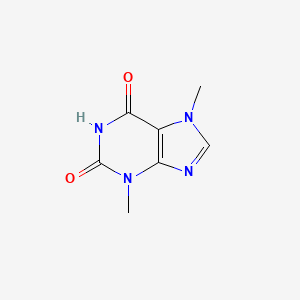
Theobromine
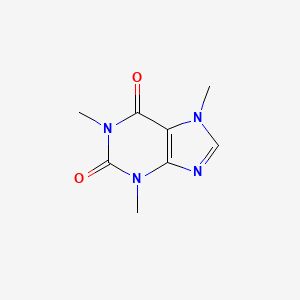
Caffeine
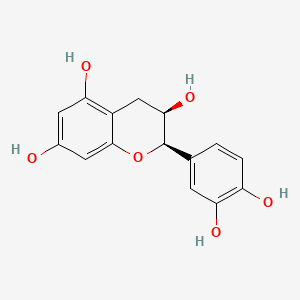
(−)-Epicatechin
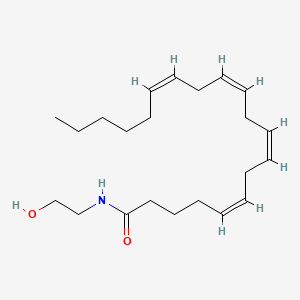
Anandamide
Methylxanthine pharmacology
Theobromine is cacao’s characteristic alkaloid. Like caffeine, it blocks adenosine receptors, but it has lower central potency, a longer elimination profile and relatively prominent peripheral effects. Controlled studies describe modest changes in alertness and cardiovascular sensation at ordinary exposures; much larger isolated doses can become unpleasant, with nausea, headache and dysphoria (Baggott et al., 2013; Judelson et al., 2013; Martínez-Pinilla et al., 2015). Caffeine varies by cultivar and processing and can contribute materially to wakefulness and expectancy. Together they help explain sustained energy, heartbeat awareness and delayed sleep without placing cacao among 5-HT2A psychedelics.
The drink is chemically variable. Genetics, pulp fermentation, drying, alkalisation and roasting alter methylxanthines, polyphenols, biogenic amines and flavour precursors. Fermentation involves a succession of yeasts, lactic-acid bacteria and acetic-acid bacteria; heat and acids penetrate the seed, reduce astringency and create precursors later converted into pyrazines and hundreds of aroma compounds. “Raw” and “ceremonial grade” are therefore commercial or ritual descriptors, not standard pharmacological categories.
Polyphenols, amines and the “bliss chemical” claim
Fresh cacao is rich in flavanols, especially epicatechin and oligomeric procyanidins. Processing usually reduces them. Human studies have investigated endothelial nitric-oxide signalling, cerebral oxygenation and cognition; results depend on dose, product, comparator and task. Earlier positive vascular observations coexist with recent acute trials reporting null effects on selected cognitive tasks; neither result by itself establishes a mechanism for ritual experience (Gratton et al., 2020; Akyürek et al., 2025; Altınok et al., 2025).
Chocolate contains phenethylamine, tyramine and related trace amines, but oral phenethylamine is rapidly metabolised by monoamine oxidase B. Anandamide was detected in chocolate with N-oleoylethanolamine and N-linoleoylethanolamine, which can slow its breakdown in vitro; the amounts and metabolism do not establish a cannabis-like effect in ordinary drinking cacao (di Tomaso, Beltramo and Piomelli, 1996). Tetrahydro-β-carbolines have also been identified in processed cocoa, probably arising during manufacture, but no evidence shows an ayahuasca-like monoamine-oxidase inhibition at beverage exposures (Herraiz, 2000). These molecules are chemically interesting; none individually validates a total explanation of affection, communion or ritual efficacy.
Mild psychoactivity. Theobromine and caffeine produce measurable psychophysiological effects. Their ratio, prior caffeine use, fasting, sweetness and expectation shape subjective intensity.
Classic psychedelic action. Cacao is not known to activate the serotonergic mechanism that defines psilocybin, DMT, LSD or mescaline, and does not reliably produce their perceptual syndrome.
“Heart opening”. This is a recurrent emic description in contemporary ceremony. Vascular sensation, stimulant arousal, music, interpersonal attention, symbolism and expectancy are plausible contributors; no specific cacao molecule has been shown to encode the experience.
Tradition, ritual & cultural use
Oldest evidenced human use
At Santa Ana–La Florida in south-eastern Ecuador, Mayo-Chinchipe-Marañón vessels and artefacts yielded cacao starch grains, absorbed theobromine and ancient cacao DNA dating to approximately 5450–5300 calibrated years before present—about 3500 BCE (Zarrillo et al., 2018). The site’s architecture, mortuary deposits and long-distance materials place cacao within ceremonial and exchange contexts rather than a merely domestic food inventory. A 2024 survey combining ancient DNA with residue chemistry across more than three hundred pre-Columbian ceramics found cacao traces widely distributed in South and Central America, supporting long histories of movement and hybridisation (Lanaud et al., 2024).
Mesoamerican evidence appears later but early. Residues from Puerto Escondido, Honduras, date to about 1400–1100 BCE and may represent a fermented beverage made initially from sweet fruit pulp rather than seed chocolate (Henderson et al., 2007). Theobromine in vessels from San Lorenzo places cacao among Olmec-period practices by the second millennium BCE (Powis et al., 2011). These findings displace older narratives in which cacao was invented only by Classic Maya elites, while leaving room for distinct regional inventions in processing, foaming and ritual form.
Peoples, territories and historical formations
Mayo-Chinchipe-Marañón and neighbouring networks. Early residues occur in a ceremonial centre linked by marine shell and other materials to Pacific and Andean exchange. Cacao’s history begins within interconnected lowland–highland worlds, not inside modern national boundaries.
Mokaya, Olmec and Honduran communities. Spouted jars, bowls and bottles document changing uses of pulp, seed and drink during the second millennium BCE. The vessels indicate serving practices but do not all imply the same recipe or social institution.
Classic and Postclassic polities; living Maya peoples. Painted vessels and hieroglyphs place kakaw in courtly feasts, marriage negotiations, funerary offerings, deity narratives and gift exchange. Ch’orti’, Yucatec, Lacandon and other Maya traditions preserve distinct contemporary and historical ritual uses; “Maya cacao” is not one uniform rite.
Nahua and Mexica systems. Cacao arrived through tribute and trade from warmer provinces. Beans acted as small-denomination money and elite provisions, while prepared drinks entered banquets, lifecycle observances, medicine and offerings.
Indigenous, African and European transformations. Cacao recipes, labour and knowledge moved through convents, households, pharmacies, ports and plantations. Sugar, cinnamon, milk and hot service became prominent, while American techniques and terminology remained fundamental.
Preparation as ritual technology
No single “traditional cacao” recipe spans the Americas. Early beverages may have fermented the fruit pulp. Mesoamerican seed preparations commonly roasted or toasted fermented beans, removed shells, ground nibs on a metate and combined the paste with water, maize or other ingredients. Pouring repeatedly between vessels or using whisks generated a prized foam. Chile, honey, achiote, vanilla and fragrant flowers occur in different periods and places; each ingredient carried sensory and classificatory implications. Red annatto could make the surface resemble blood, while maize located cacao within broader relations of subsistence and personhood (McNeil, 2006; Coe and Coe, 2013).
The vessel was part of the preparation’s meaning. Classic Maya cylinder texts may name the object as a drinking vessel, specify a cacao preparation and identify an owner. Images show courtly presentation, marriage exchange and supernatural scenes. Residue studies nevertheless caution against reading every inscribed cylinder as an everyday cup: some were display objects, funerary gifts or ritual containers whose identity exceeded their last detectable contents (Loughmiller-Cardinal, 2019). Gourds and carved jícaras, less likely to survive archaeologically, continued to organise serving, foam and reciprocity.
Ritual practice, healing and social reproduction
Among Classic Maya courts cacao appeared in feasts that made alliances visible, in marriage transactions joining houses, and in mortuary deposits sustaining the dead. Its value derived from restricted ecology, labour, transport, aroma and display as well as taste. In Postclassic and colonial Central Mexico, merchants and tribute officials moved beans from cacao-growing provinces; counterfeiting records attest to their monetary function. Drinking marked rank, but cacao was not absolutely confined to elites: market use, ritual redistribution and changing supply created wider access (McNeil, 2006; Chinchilla Mazariegos, 2016).
Ethnography among Ch’orti’ Maya in eastern Guatemala records cacao–maize drinks within the annual traída del invierno, “bringing the rain”. At a sacred spring in late April, ritual specialists address rain-bearing beings, the Holy Earth and Catholic figures through prayer, turkey sacrifice, food and black or white chilate. Cacao participates in a reciprocal system joining water, cultivation, ancestors and community (Kufer, Grube and Heinrich, 2006). Northern Lacandon god-house rites and Yucatec Maya healing likewise locate cacao among offerings, incense, speech and diagnosed relations with nonhuman persons.
The sixteenth-century Florentine Codex records cacao sellers, recipes, medical classifications and effects in Nahua terms. Good cacao was valued for flavour and invigoration; badly prepared or excessive drink was described as disorienting. Colonial medical texts combined Indigenous materia medica with humoral theory, prescribing cacao mixtures for fatigue, digestion and other conditions. These sources are indispensable but mediated by multilingual collaboration, Christian institutions and colonial collection; they are records of negotiated knowledge, not transparent windows onto a timeless pre-Conquest system.
Art and material culture
Cacao survives archaeologically through more than beans. Spouted bottles control pouring and fermentation; cylinder vases stage presentation; glyphic captions name kakaw and recipes; painted scenes show attendants, lords and supernatural actors; codices enumerate tribute loads; censers and caches place beans near deities and ancestors. The visual archive links cacao to maize, gourds, blood, merchant bundles and the rebirth of divine bodies. Because images are active ritual objects as well as illustrations, interpretation depends on archaeological context, text and use-wear rather than iconographic resemblance alone.
Cosmology & key terms
Key terms and relations
| kakaw | A widely attested Mayan term written in Classic Maya inscriptions. Its appearance in vessel texts links language, substance and patronage. |
| yuk’ib | A “drinking implement” or drinking vessel in Classic Maya dedicatory texts; often followed by the owner and named cacao preparation. |
| Primary Standard Sequence | The modern scholarly name for a recurrent dedicatory formula around Maya vessels. It may describe the vessel’s ritual activation, function, contents and owner. |
| cacahuatl | Nahuatl for cacao/bean. The popular etymology translating “chocolate” simply as “bitter water” is disputed in historical linguistics. |
| God M / Ek’ Chuah | A scholarly designation and colonial name associated in particular sources with merchants, travel and cacao. “The Maya cacao god” is too singular for deities whose identities and attributes changed across time and region. |
Maize, body and first fruit
Maya cacao imagery repeatedly grows beside or out of the Maize God. Simon Martin reads the cacao tree as a “first fruit” issuing from the deity’s renewed body: seed, burial, germination and dynastic continuity become mutually illuminating (Martin, 2006). This relation helps explain cacao in tombs and ancestor rites. It does not make cacao interchangeable with maize. Maize furnished everyday flesh and agricultural time; cacao’s relative scarcity, forest ecology and fragrant drink made it an especially marked offering and social medium.
Blood, death and transformation
Red cacao drinks and tree imagery could evoke blood without every cup being a literal blood substitute. In Central Mexican manuscripts and Pacific Coast imagery, cacao appears with sacrificial and mortuary signs, tribute bundles and merchant divinities; colour and liquid connected nourishment, preciousness and vital force (Chinchilla Mazariegos, 2016). In Maya funerary assemblages, vessels and beans provisioned deceased persons and situated them within cycles of descent and return. Gourd, skull and fruit could become visual analogues because each is a hard container of generative contents.
Rain, earth and reciprocity
Cacao requires humidity and shade, and ritual systems often place it near rain, springs, caves and fertile earth. Ch’orti’ rain rites exemplify a cosmology in which weather beings, saints, mountains and Holy Earth participate in cultivation through reciprocal feeding. Cacao–maize drinks are offerings and shared substance within that relation. Catholic names and images do not simply cover an unchanged pre-Hispanic core; they have become constituents of lived Maya practice through centuries of translation (Kufer, Grube and Heinrich, 2006).
Narrative cautions
Quetzalcoatl as giver of cacao. Modern retellings often present a single myth in which Quetzalcoatl steals cacao for humanity. Relevant colonial narratives exist, but the compact modern version is not a universal Nahua, Toltec and Maya account.
“The food of the gods”. Linnaeus coined Greek Theobroma in 1753. The scientific name poetically suits ritual histories, but it is not an Indigenous translation or proof of a pan-American theology.
No single cacao cosmology. Upper Amazonian archaeology, Classic Maya inscriptions, Nahua manuscripts and living Ch’orti’ rites belong to related yet non-identical historical worlds.
Visionary phenomenology
| Onset | Often noticeable within 30–60 minutes as warmth, stimulation, fullness or focused attention; food, recipe and prior methylxanthine exposure alter onset. |
| Primary window | Approximately 1–3 hours for the most noticeable beverage effects; not a standardised ethnographic dose-response. |
| Residual | Alertness, gastric effects or delayed sleep may persist 4–8 hours or longer because theobromine clears comparatively slowly. |
| Intensity | Usually mild as a direct psychoactive agent; moderate somatic or emotional intensity is possible with concentrated drink, fasting, movement, music and prolonged group ritual. |
| Visionary character | Not reliably hallucinogenic. Imagery, reverie and dreamlike absorption may occur in prayer, meditation, dance or sleep, but are not a consistent pharmacological signature. |
Bodily and attentional field
Participants commonly describe spreading warmth, greater salience of heartbeat and breath, mild wakefulness, appetite suppression or satiety, and sustained rather than sharply peaking energy. Bitter, fatty, astringent and aromatic qualities matter: the drink coats the mouth and stomach, while the labour of sipping establishes tempo. In higher or poorly tolerated exposures the same field can become reflux, nausea, sweating, tremor, headache, restlessness, tachycardia or insomnia (Baggott et al., 2013).
Emotion, relation and ceremony
In contemporary ceremonial discourse, “heart opening” gathers several experiences: softened social defence, readiness to speak, grief or affection becoming accessible, tactile warmth and perceived connection to a group, landscape or personified cacao. Ethnographic, theoretical and review literature shows that these states are organised by facilitators’ narratives, drinking sequence, music, breathwork, silence, touch norms and participant expectation as well as the beverage (Burby, 2021; Valle-Kendall and Piñones-Rivera, 2025; Charles and Ormsby, 2026). As an emic term, “heart opening” identifies the vocabulary through which sensations are recognised and communicated.
Historical Mesoamerican sources foreground invigoration, luxury, foam, appetite, social rank and the obligations of giving more often than private visionary revelation. Sahagún’s Nahua collaborators describe an ordinary amount as something that “gladdens one, refreshes one, consoles one, invigorates one” (Sahagún, 1950–1982, Book 11). This compact phenomenology joins mood and bodily restoration without converting cacao into a classic hallucinogen.
> It gladdens one, refreshes one, consoles one, invigorates one.
Vision, dream and interpretation
Cacao can accompany divination, ancestor address and curing without being the sole cause of visions. Repetitive music, darkness, fasting, incense, dance, prayer and sleep all cultivate imagery. In some contemporary settings participants report colours, memories, internal scenes or a sensed plant presence; the reports are meaningful ethnographic data but do not establish a unique cacao visionary syndrome. The clearest contrast with serotonergic psychedelics is perceptual: stable geometric patterning, scene replacement and radical visual transformation are neither expected nor consistently reproduced.
Invigoration and consolation. Colonial Nahua descriptions integrate energy, pleasure and restoration. They are closer to cacao’s known methylxanthine profile than claims of obligatory visions.
Heart-centred relation. Current circles recurrently describe emotional access and relational warmth. The pattern is ethnographically observable even while mechanisms remain distributed across pharmacology and setting.
Ritual psychopharmacology. Laboratory studies isolate compounds or nutrients; ceremony studies examine meaning and practice. Few studies measure chemistry, physiology and phenomenology within the same ritual event.
Contemporary status
Contemporary expressions and transformations
Cacao remains active in Indigenous household, agricultural, Catholic and community rites across Mesoamerica and South America, although documentation is uneven and practice changes with migration, conversion, market access and local politics. In parallel, craft-chocolate movements have renewed attention to origin, fermentation and varietal difference. Diasporic cooks, chefs, artists and ritual practitioners recombine cacao with older and newer forms of gathering.
The transnational “cacao ceremony” visible in Europe and North America is a twenty-first-century formation drawing selectively on Maya and Aztec imagery, yoga, ecstatic dance, sound healing, psychotherapy, festival culture and contemporary plant-personhood discourse. Ethnographic accounts identify Lake Atitlán teacher Keith Wilson—known as the “Chocolate Shaman”—as influential in popularising the phrases “cacao ceremony” and “ceremonial-grade cacao” from the early 2000s; this describes one network’s genealogy rather than the origin of ritual cacao generally (Burby, 2021). Recent scholarship analyses participants’ understandings of cacao as plant medicine, relational being and facilitator of emotion while noting that interpersonal effects remain sparsely tested (Valle-Kendall and Piñones-Rivera, 2025; Charles and Ormsby, 2026).
Historical relation should be specified rather than assumed. Some contemporary groups learn from named Indigenous teachers or source cacao through community partnerships; others construct ceremonies from books, social media and wellness practice. The relevant scholarly questions concern transmission, authority, naming, sensory discipline, commerce and claims of lineage. “Ceremonial grade” currently has no taxonomic, pharmacopoeial or international regulatory definition.
Economy, labour and regulation
Cacao is now a global commodity produced principally by smallholders. Côte d’Ivoire and Ghana dominate supply, with Ecuador, Nigeria, Cameroon, Brazil, Indonesia and others important in distinct market segments. Climate shocks, black pod, cacao swollen shoot virus, ageing trees and under-investment contributed to the extraordinary 2024 price spike and continuing volatility; the International Cocoa Organization’s daily indicator remained elevated at about US$6,008 per tonne on 4 August 2026 (ICCO, 2026). High terminal-market prices do not translate mechanically into equivalent farm income because harvest timing, fixed farm-gate prices, debt, quality, transport and market structure intervene.
The European Union Deforestation Regulation includes cocoa and requires geolocation and due diligence for products placed on or exported from the EU market, with application scheduled from 30 December 2026 for large and medium operators and 30 June 2027 for micro and small operators (European Commission, 2026). The rule joins older certification and traceability systems but also imposes mapping and documentation costs. Food law governs cacao and methylxanthines in most jurisdictions; “ceremonial cacao” is not a separate legal drug category.
Biological and cultural conservation
The crop’s global abundance can obscure genetic erosion. Commercial planting concentrates a limited subset of diversity, while habitat loss, disease, replacement of old trees and loss of farmer-selected material diminish local populations. Recalcitrant seeds make conventional seed banking impossible. Field genebanks, cryopreservation, genomic catalogues and farmer-managed agroforests therefore conserve different things and require sustained collaboration (Ceccarelli et al., 2022; Nousias et al., 2024).
Major biological threats include black pod caused by several Phytophthora species, witches’ broom and frosty pod caused by Moniliophthora, and cacao swollen shoot virus. Climate exposure is regional: heat, drought and altered rainfall interact with soils, shade and pathogens rather than producing one universal forecast. Agroforestry can buffer temperature, diversify income and maintain habitat, although canopy design must manage disease and yield trade-offs (Schroth et al., 2016; Lahive, Hadley and Daymond, 2019).
Cultural conservation concerns languages, ritual offices, recipes, cultivated varieties, vessels and the right to interpret them. Archaeological motifs circulating as global branding may be detached from the communities and disciplines that make them intelligible. At the same time, living traditions are not fixed heritage displays: new ingredients, Catholic figures, commodity crops and digital networks can become part of legitimate local histories.
Patents, geographical indication and ownership
Patent activity concentrates on polyphenol extracts, health products, fermentation control, flavour development, disease resistance and plant-cell culture. US7820713B2, for example, claims cocoa extracts enriched in polyphenols and procyanidins; WO2025178990A1 concerns cacao somatic-embryo cell culture for chocolate-like products. A 2024 patent-landscape study found growing but still technologically immature fermentation patenting (Nascimento et al., 2024). Such rights usually claim processes or compositions, not the species or ancient ritual knowledge as a whole.
Other ownership instruments operate differently. Venezuela’s Chuao cacao has a protected appellation of origin, tying name and quality to place and producer organisation. The 2024 WIPO Treaty on Intellectual Property, Genetic Resources and Associated Traditional Knowledge creates a disclosure requirement for patent applications based on genetic resources or associated knowledge once the treaty enters into force for its parties. Neither geographical indications nor disclosure automatically resolve benefit distribution, but they change how provenance becomes legally visible.
Latest research: genomes, brains and ritual worlds
Ancient circulation. Lanaud et al. (2024) combined biochemical screening and ancient DNA to show extensive pre-Columbian movement and crossing of cacao populations across South and Central America.
Reference expansion. The Matina 1-6, Criollo, CCN51 and additional assemblies increasingly reveal structural variants and disease-resistance regions, reducing dependence on one reference genome (Argout et al., 2011; Motamayor et al., 2013; Nousias et al., 2024; Tan et al., 2026).
Mixed acute results. Flavanol-rich cocoa can alter vascular measures, yet recent controlled studies found no acute benefit on selected attention or working-memory tasks. Product chemistry and task selection remain decisive (Gratton et al., 2020; Akyürek et al., 2025; Altınok et al., 2025).
An emerging field. Recent ethnographies analyse cacao ceremony as religion, wellbeing practice and human–plant relation. The literature is young and based largely on qualitative or self-selected samples; it establishes a social formation more securely than clinical efficacy.
Bibliography
Archaeology & history
Botany & taxonomy
Chemistry & pharmacology
Ethnography, ritual & cosmology
Law, policy & patents
Visionary phenomenology
Cross-correlations
| Kingdom / ecology | Plantae · humid-forest understorey tree · pollinator-dependent perennial crop |
| Compounds | Theobromine · caffeine · epicatechin and procyanidins ⇌ mild methylxanthine psychoactivity, not classic serotonergic psychedelic action |
| Deep history | Upper Amazonia from c. 3500 BCE ↳ later distributed South and Central American domestication, exchange and hybridisation |
| Cultural complexes | Mayo-Chinchipe ceremonial networks · Maya cacao rites · Nahua/Mexica tribute and feast systems · Ch’orti’ rain ritual · colonial Atlantic chocolate · contemporary cacao ceremony |
| Ritual media | Drink · foam · fragrance · offering · feast · marriage gift · funerary provision · tribute · currency · plant-person relation |