Mimosa tenuiflora
Botany
| Accepted name | Mimosa tenuiflora (Willd.) Poir., 1810 |
| Synonyms | Mimosa hostilis (C. Mart.) Benth. — still dominant in psychedelic commerce; Acacia tenuiflora Willd.; Acacia hostilis Mart.; Acacia jurema Mart. (Kew Science, 2026; Camargo-Ricalde, 2000) |
| Family | Fabaceae (Leguminosae), mimosoid clade, subfamily Caesalpinioideae — older literature: Mimosaceae/Mimosoideae |
| Order | Fabales |
| Geographic range | Disjunct: southern Mexico (Oaxaca, Chiapas) through Central America (Guatemala–Panama), Colombia, Venezuela, and the Brazilian Caatinga (Bahia, Pernambuco, Paraíba, Rio Grande do Norte, Ceará). Sea level to ~1,100 m. |
| Local names |
|
| Entheogenic compounds | DMT (bark, esp. root) · N-methyltryptamine · trace β-carboline-like compounds |
| Morphology | Branched, deciduous, prickly shrub or small tree, 4–6 m (to ~8 m). Bipinnate leaves 3–6 cm; fragrant whitish spikes 4–8 cm; brittle segmented pods.
|
Chemistry
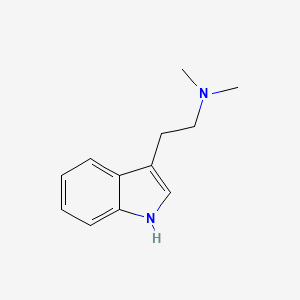
DMT
revised 2015
Yuremamine
trace
N-methyltryptamine & β-carbolines
alkaloid
Non-alkaloid constituents
Pharmacological open questions
DMT is normally MAO-metabolised and not reliably psychedelic when swallowed alone. Unlike ayahuasca, traditional jurema has no consistently demonstrated B. caapi-like source of adequate MAO inhibition — this is a live problem, not a solved footnote.
How historical vinho da jurema achieved oral activity — candidates include undisclosed admixtures, fermentation chemistry, very concentrated dosing, uncharacterised trace β-carbolines, individual metabolic variance, or entactogenic effects from fasting/dance/tobacco/expectation rather than DMT alone.
Yuremamine is widely claimed online to inhibit MAO. Neither isolation nor structural revision demonstrated physiologically effective MAO-A inhibition — the claim remains unproven.
Antidepressant-, anxiolytic- and sedative-like signals (5-HT₂A/2C, proposed GABAergic/serotonergic pathways) are mouse and zebrafish data — hypothesis-generating, not clinical evidence (Duarte-Filho et al., 2022; Araújo et al., 2025).
Juremahuasca (with Peganum harmala) is pharmacologically distinct from unadulterated traditional jurema and cannot retrospectively explain 18th-century preparations.
Tradition, ritual & cultural use
| Oldest evidenced / proposed use | No secure archaeobotanical residue or dated preparation exists specifically for M. tenuiflora. Earliest secure written record: September 1739, Pernambuco Council of Missions, Mamanguape villages; spread among Panaty, Jacoca, Pega, Corema peoples reported 1743 (Wadsworth, 2006). Probable precolonial origin — Documented from 1739 only. |
| Peoples & traditions | Xukurú, Pankararu, Atikum, Kariri-Xocó, Xocó, Fulni-ô, Potiguara, Truká, Tuxá, Kambiwá, Pankararé — rites are not interchangeable; some communities preserve significant secrecy (Mota, 1997; Grünewald, 2018). |
Ritual complexes
Jurema is not one tradition but several overlapping formations, historically layered rather than a single "Jurema religion."
Toré
Collective circle/processional dance — sung toantes, maracás, tobacco, invocation or embodiment of encantados. Simultaneously sacred practice, public identity, and political affirmation.
Ouricuri
More restricted sacred-forest complex, esp. Kariri-Xocó, Xocó, Fulni-ô. May include initiation, healing, ancestral relations, and knowledge levels undisclosed to outsiders.
Catimbó / Jurema Sagrada
Urban and rural northeastern field combining Indigenous masters and caboclos, Catholic saints and prayer, Afro-Brazilian mediumship, smoke curing, divination, popular medicine.
Contemporary juremahuasca
Metropolitan formations combining ayahuasca-style brewing with Peganum harmala, New Age cosmology, psychotherapy, global psychedelic culture (Grünewald, 2022).
| Role in shamanism | Mestre de jurema (also pajé, healer, medium) prepares and administers the drink, uses tobacco and prayer, calls spirits through song, diagnoses, divines, and regulates encounters with powerful beings. In Catimbó/Jurema Sagrada the emphasis often shifts to incorporation — masters and caboclos speak through mediums — where vision is not the highest criterion of efficacy (Wadsworth, 2006). |
| Role in physical & cultural healing | Healing is ceremonial and communal, not reducible to DMT pharmacology. Ritual, song and sacred woodland have also functioned as cultural survival infrastructure for peoples that colonial and later state classifications declared assimilated or extinct (Mota, 1997). |
Cosmology & key terms
"Jurema" is not a one-to-one botanical designation. It can denote the plant, the drink, an enchanted female power, a sacred territory or city, and the wider religious tradition at once — an ethnographic mention of jurema does not by itself establish the species was M. tenuiflora.
- Encantados
- Not simply "ghosts" — some ancestors, others beings who became enchanted rather than dying ordinarily. Inhabit sacred forests, trees, stones, waters, invisible cities.
- Cities of Jurema
- Cosmological places, not hallucinatory architecture — where curing power and legitimate ritual authority originate; songs call their inhabitants into the ceremonial world rather than merely describing them.
- Jurema (gendered)
- Addressed in many accounts as a female presence, mother, queen or cabocla who teaches, tests and protects — in tension with "MHRB" as standardised commodity.
- Ciência
- A field of ritual knowledge transmitted through masters, distinct from — and not translatable into — biomedical or pharmacological "knowledge."
Visionary phenomenology
Duration
No controlled pharmacokinetic study exists for traditional, chemically analysed jurema. A single duration figure cannot honestly be given for "jurema" as such — it depends entirely on which preparation is meant.
| Preparation | Duration | Caveat |
|---|---|---|
| Traditional, unanalysed jurema | Unknown / highly variable | Accounts range from minimal overt intoxication to deep trance |
| Contemporary juremahuasca (+MAOI) | Broadly ayahuasca-like, several hours | Pharmacologically distinct formulation |
| Inhaled isolated DMT | ~10–30 min | Not the duration of traditional jurema (Carbonaro & Gatch, 2016) |
| 2023 holistic ceremony | ~6 hours | Ayahuasca administered first — timing not attributable to jurema alone (Savoldi et al., 2023) |
Intensity
Ranges from subtle teaching or wakeful mediumistic presence, with no obvious visions, to severe disorientation, purging, collapse-like trance and loss of ordinary world-awareness. The 2023 observational study (n=26, beverage administered after ayahuasca, neither chemically quantified) linked jurema-associated ego-dissolution to religious quality, unity, and perceived subjectivity of surrounding things — suggestive phenomenology, not clean pharmacology.
Recurring visionary motifs
- Sky or hidden world opening
- Palaces, churches, enchanted cities
- Ancestors, the dead, masters, caboclos
- Animated colour of plants, walls, body
- A presence speaking through another participant
- Noetic instruction — knowledge received, not reasoned
- Purging, bodily heaviness, appearing "as if dead"
- Teaching without imagery
Traditional phenomenology resists reduction to "DMT entities" — the culturally salient question is often who came, what relationship was established, what knowledge or healing was delivered, not what internal image appeared.
> "…palaces, paintings, and churches … the sky open and the dead arise to sit next to them" — 1743 Capuchin missionary report, quoted in Wadsworth (2006, p. 149) — an early, visually specific account, but a hostile colonial paraphrase, not a first-person Indigenous transcript.
Contemporary status
| Conservation | Globally Least Concern (BGCI & IUCN, 2019) — widespread, drought-tolerant, disturbance-adapted. Least Concern does not mean every population is secure:
|
| Local & global economies | Fuelwood, charcoal, fence posts, fodder, apiculture, tannin/leather/dye, traditional medicine, Caatinga restoration (Brazil); tepezcohuite wound-care and cosmetic markets (Mexico) — a controlled study found improved venous ulcer healing with standardised topical extract, not broader "anti-ageing" claims (Rivera-Arce et al., 2007). No trustworthy figures separate dye/cosmetic/DMT-precursor trade globally. |
Legality
| Jurisdiction | Status |
|---|---|
| International | DMT is Schedule I, 1971 Convention on Psychotropic Substances — schedules the chemical, not automatically every DMT-containing plant (UN, 1971). |
| United Kingdom | DMT is Class A. Bark/extracts/preparations treated variably depending on whether they constitute a DMT-containing preparation and evidence of intended extraction (Home Office, 2025). |
| United States | DMT Schedule I federally. The living tree is not separately scheduled; processed bark, import, and preparations may attract enforcement where DMT content/intent is established. Religious exemptions are narrow and case-specific. |
| Brazil | M. tenuiflora not generally prohibited as a plant; DMT is controlled. Ayahuasca's religious-practice framework should not be assumed to automatically cover jurema preparation/sale. |
| Singapore | Official guidance explicitly prohibits M. tenuiflora, its derivatives, and other DMT-containing plants (Central Narcotics Bureau, 2026). |
Legality should never be inferred from vendor language like "natural dye" or "not for human consumption."
Commercial appropriation & patents
Patents target extracts, processes and applications, not the species itself:
- WO2007072233A2 — improved M. tenuiflora extracts for ulcer treatment
- FR3083450A1 — oily bark extract for antioxidant/anti-ageing/hair-care use
A patent protects a claimed technical invention, not clinical efficacy. These filings convert tepezcohuite/jurema knowledge into proprietary wound-care and cosmetic technology, raising access-and-benefit-sharing questions — prior art, attribution, community consent, and who profits from biocultural knowledge.
Bibliography
Archaeology & history
Botany & taxonomy
Chemistry & pharmacology
Conservation & ecology
Ethnography, ritual & cosmology
Law, policy & patents
Toxicology & safety
Visionary phenomenology
Cross-correlations
| Family | Fabaceae — no other Fabaceae entries yet |
| Compounds | DMT ↳ shared with Psychotria viridis, Diplopterys cabrerana, Anadenanthera spp. |
| Region | NE Brazil (Caatinga) · S. Mexico–Panama |
| Sacrament complex | Vinho da jurema — contrasts with ayahuasca — MAOI mechanism solved (B. caapi) vs. unresolved in jurema |