Lophophora williamsii


Botany
| Accepted name | Lophophora williamsii (Lem. ex J.F.Cels) J.M.Coult. — accepted by Plants of the World Online |
| Basionym | Echinocactus williamsii Lem. ex J.F.Cels, published in 1842. Coulter established the combination in Contributions from the United States National Herbarium 3: 131 (1894). |
| Family / order | Cactaceae · Caryophyllales. |
| Life form | Perennial, spineless, geophytic succulent subshrub; solitary or caespitose, with a photosynthetic crown above a contractile subterranean stem and large napiform root. |
| Geographic range | Native from south-western and southern Texas through the Chihuahuan Desert and Tamaulipan thornscrub of northern Mexico, extending south through San Luis Potosí and Zacatecas to parts of Querétaro and Jalisco. Distribution is discontinuous, and culturally important populations occur in the South Texas “peyote gardens” and Wirikuta in San Luis Potosí (Anderson, 1996; POWO, 2026). |
| Habitat | Calcareous desert scrub, gravelly limestone slopes and Tamaulipan thornscrub, often beneath nurse shrubs. Most records occur from low elevations to about 1,500 m, exceptionally higher. |
| Local names | Peyote / peyotl (from Nahuatl peyōtl); Wixárika híkuri; Rarámuri jíkuri / híkuri; “medicine” in many Native American Church contexts. “Mescal” and “mescal button” are historical English labels and can be confused with agave spirits. |
| Conservation | Vulnerable IUCN category VU, population trend decreasing. Mexico lists the species as subject to special protection (Pr) under NOM-059-SEMARNAT-2010; Cactaceae are generally included in CITES Appendix II (Terry and Trout, 2017; IUCN, 2017). |
Morphology
The exposed crown is blue-green, grey-green or occasionally reddish, depressed-globose and commonly about 4–12 cm across, though clustered plants can form much wider patches. Five to thirteen broad ribs become divided into rounded tubercles as the plant ages. Juveniles may bear vestigial spines; adult areoles are spineless and carry tufts of whitish or yellowish wool, densest at the sunken apex. Pale pink, whitish or lightly yellow flowers arise from this wool, followed by elongated pink to brownish fruits containing small black seeds (Anderson, 1996; Hunt, Taylor and Charles, 2006).
Much of the plant remains below ground. A thick, corky, carrot-like root merges into non-green subterranean stem tissue; drought contraction can pull the crown nearly flush with the soil. This architecture stores water and permits regrowth when the crown is cut above the subterranean stem. Cutting too low, removing the root or damaging the subterranean stem prevents that recovery (Terry et al., 2011; Klein et al., 2015).
Species boundaries and “false peyotes”
Lophophora taxonomy has repeatedly shifted between a two-species model and finer divisions. Current Kew taxonomy accepts L. alberto-vojtechii, L. diffusa, L. fricii and L. williamsii; cultivated names such as jourdaniana have inconsistent rank. The southern L. diffusa complex is typically yellow-green, softer-ribbed and chemically richer in pellotine than mescaline. Morphology, locality and molecular data are preferable to colour alone (Chan et al., 2021; POWO, 2026).
“False peyote” is an ethnobotanical rather than taxonomic category applied to several small desert cacti—including Ariocarpus, Astrophytum, Turbinicarpus and other Lophophora—that resemble peyote, substitute for it, carry related names or occupy parallel medicinal roles. Some contain bioactive alkaloids; others do not. The category records local classification and colonial/commercial confusion, not a single botanical group (Chan et al., 2021).
Growth, flowering and ecology
Wild peyote is extremely slow-growing. Establishment is patchy and strongly associated with perennial nurse plants that moderate heat and moisture stress. Six surveyed Texas populations differed sharply in density and size structure even within the same ecoregion, cautioning against extrapolating from a single ranch or harvest district (Ermakova et al., 2021). Flowers are self-compatible in northern populations and insect-visited; clonal offsets also contribute to local persistence.
Seedlings are especially vulnerable to desiccation and disturbance. Mature crowns can survive drought by retracting, yet road construction, brush clearing, soil compaction and removal of nurse vegetation destroy the microsites on which recruitment depends. Conservation is consequently a problem of habitat structure and land tenure as well as individual cactus abundance.
Harvest and regeneration
A conservation harvest removes the green crown with a level cut above the subterranean stem and leaves the root in place. Dormant areoles can then produce one or more new crowns. Experiments in South Texas found, however, that repeated cutting at two-year intervals reduced crown mass and survival: regeneration is possible, not unlimited. Mescaline is concentrated overwhelmingly in the green crown, while non-green stem contains far less and root still less, so uprooting adds little chemical yield while killing the plant (Terry et al., 2011, 2012, 2014; Klein et al., 2015).
Chemistry
Entheogenic & associated compounds
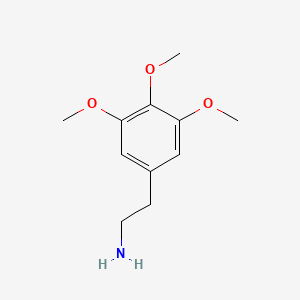
Mescaline

Pellotine

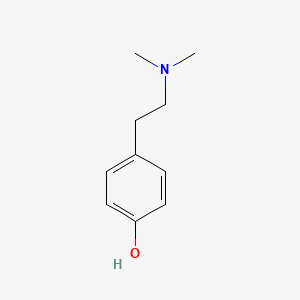
Hordenine
Alkaloid profile
Peyote contains dozens of phenethylamine and tetrahydroisoquinoline alkaloids. Mescaline is the principal psychedelic and is concentrated in chlorophyllous crown tissue; reported concentrations vary with population, plant, tissue, age, season and analytical method. Pellotine, anhalonidine, anhalamine, lophophorine and hordenine are recurrent secondary constituents. Their presence makes whole peyote chemically different from purified mescaline, but evidence that they substantially reshape the human visionary state at naturally occurring proportions remains limited (Dinis-Oliveira, Pereira and da Silva, 2019; Doesburg-van Kleffens, Zimmermann-Klemd and Gründemann, 2023).
Arthur Heffter isolated mescaline in 1897 and used self-experiment to identify it as peyote’s active principle; Ernst Späth established its structure by synthesis in 1919. Peyote thereby became a pivotal object in experimental psychopharmacology: one of the earliest plant sacraments translated into a chemically defined psychedelic, while continuing to circulate in ceremonial forms that never depended on laboratory isolation (Heffter, 1898; Späth, 1919; Jay, 2019).
Biosynthesis and pharmacology
Mescaline is biosynthesised from L-tyrosine through dopamine-derived intermediates. Transcriptomic, metabolomic and enzyme-characterisation work has now identified the principal hydroxylation and O-methylation steps in peyote; an independent 2024 study reconstructed the pathway and its spatial organisation. This research concerns plant metabolism and offers tools for biosynthetic study, not evidence that an engineered product reproduces peyote as a biological or ceremonial entity (Watkins et al., 2023; Berman et al., 2024).
In humans, mescaline’s psychedelic effects are mediated principally by serotonin 5-HT2A receptor agonism, with 5-HT2C and other targets contributing. It is absorbed more slowly and lasts longer than psilocybin or DMT. Controlled work found dose-dependent alterations of consciousness, sympathetic activation and an average subjective duration rising across conditions from roughly six to fourteen hours; ketanserin markedly attenuated effects, supporting 5-HT2A mediation (Klaiber et al., 2024). Mescaline is excreted partly unchanged and partly after oxidative deamination.
Traditional forms
Documented preparations include fresh or dried crown tissue, powder, cold-water infusions and decoctions. In Wixárika pilgrimage and feast cycles, harvested híkuri is distributed between immediate ceremonial use, return to communities and later rites. Native American Church meetings commonly use dried buttons, ground material or liquid forms within prayer and protocol. These are not interchangeable “delivery methods”: preparation, distribution, prayer and authority are parts of the sacrament’s social form (Myerhoff, 1974; Stewart, 1987).
Primary activity. Mescaline is the principal psychedelic alkaloid, with human effects substantially mediated by 5-HT2A receptors.
Chemotype and tissue. Alkaloid percentages vary; figures from a single crown, cultivated clone or analytical method should not be treated as a species constant.
Plant and molecule. Findings from synthetic mescaline establish neither the full pharmacology of whole peyote nor the meaning of peyote in ceremony.
Tradition, ritual & cultural use
Oldest evidenced or proposed human use
Two compact plant aggregates from Shumla Cave No. 5 in the Lower Pecos canyonlands contained mescaline and yielded calibrated dates around 3780–3660 BCE. Further dating of three Shumla specimens produced a mean near 5195 radiocarbon years BP—about six thousand calendar years ago. Microscopy showed that these objects were manufactured mixtures of ground peyote and other plant fibres shaped into button-like effigies, not simply desiccated cactus crowns. A specimen from Cuatro Ciénegas, Coahuila, dated to roughly the ninth–eleventh centuries CE (El-Seedi et al., 2005; Terry et al., 2006).
The finds securely demonstrate ancient handling of mescaline-bearing peyote in ritual deposits within the plant’s range. They do not identify the language, polity or exact practice of their makers, and they cannot by themselves prove uninterrupted institutional continuity with the Wixárika pilgrimage, Rarámuri curing or the Native American Church. That distinction between antiquity of use and continuity of a named tradition is central to the evidence.
Colonial record and suppression
Bernardino de Sahagún’s sixteenth-century account associated peyotl with Chichimeca peoples and described visions, fearlessness and endurance; Francisco Hernández later treated its medicinal properties. Such texts were written through colonial categories and often collapsed distinct northern peoples. Missionaries and inquisitors connected peyote divination with idolatry and diabolism. A Holy Office edict issued in 1620 prohibited its divinatory use across New Spain and beyond, while case records show use among Indigenous, African, mestizo and Spanish subjects (Sahagún, 1950–1982; Aguirre Beltrán, 1963; Barnett, 2025).
Prohibition did not end peyote practice. It changed visibility, encouraged concealment and generated an archive disproportionately composed of denunciations and prosecutions. Colonial evidence is therefore valuable for geography and social circulation, but its language of superstition cannot be adopted as neutral ethnographic description.
Peoples and territories
Sierra Madre Occidental ↔ Wirikuta. Wixárika communities in Jalisco, Nayarit, Durango and Zacatecas sustain a pilgrimage eastward to Wirikuta in San Luis Potosí. Híkuri participates in a ritual economy joining maize agriculture, deer hunting, rain, fire, ancestors and sacred places. Pilgrims undergo abstinence, confession, altered kin terms and instruction; the first peyote is approached as quarry and ritually “shot” before harvesting (Furst, 1972; Myerhoff, 1974; Schaefer and Furst, 1996).
Sierra Tarahumara. Rarámuri jíkuri practices include curing, divination, protection and circular night dances often described as raspa. A specialist attends and addresses the medicine, diagnoses affliction and restores right relations. Historical reports also describe external medicinal applications and use in endurance contexts, but these should not eclipse the plant’s status as a powerful agent requiring protocol (Lumholtz, 1902; Bennett and Zingg, 1935; Bonfiglioli, 2009).
Western and northern Mexico. Cora/Náayeri and Tepehuan/O’dam records include peyote in curing, rain, agricultural and ceremonial networks. Details vary by community and period; the ethnographic literature is less extensive than for Wixárika or Rarámuri practice and should not be filled by analogy.
Intertribal peyote movement. In the later nineteenth century, ceremonial forms moved through Lipan and Mescalero Apache, Carrizo/Coahuiltecan and southern Plains networks into Kiowa, Comanche, Caddo, Wichita and many other nations. Figures including Chevato, Jim Aton, John Wilson, Quanah Parker and Jonathan Koshiway shaped particular lines, but no single founder accounts for the movement (La Barre, 1938; Stewart, 1987; Barnett, 2025).
Continental Indigenous religion. Organisations using the Native American Church name incorporated from 1918 onward and now encompass many autonomous tribal and regional bodies in the United States and Canada. Peyote is sacrament and medicine in all-night meetings held for healing, mourning, birthdays, naming, military return, family need and thanksgiving. Christian language is prominent in some roads and limited in others (Stewart, 1987; Calabrese, 2013).
Ritual practice and healing
A Native American Church meeting is typically sponsored by a family and conducted by a Roadman inside a tipi around a central fire and crescent or horseshoe altar. Distinct offices may include Fireman, drummer and Cedar Chief. Prayer, testimony and peyote songs circulate with staff, gourd rattle, eagle-feather fan and water drum; singers commonly perform sets of four. Midnight water and dawn rites structure the night, which concludes with water, ceremonial foods and a communal feast. “Half Moon” and “Cross Fire” name broad ritual orientations, not fixed denominations, and local protocols remain sovereign (Stewart, 1987; Swan, 1999).
Healing is relational and moral as well as symptomatic. Participants pray for a named person, examine conduct, reconcile family tensions and interpret bodily suffering within kinship, community and spiritual responsibility. Ethnographic and epidemiological studies have explored alcohol recovery, mental health and long-term cognitive outcomes, but the meeting is not reducible to a clinical intervention and observational findings do not prove pharmacological causality (Albaugh and Anderson, 1974; Halpern et al., 2005; Calabrese, 2013).
Wixárika curing and pilgrimage likewise depend on the mara’akame’s apprenticeship, song, dream, offerings and capacity to negotiate with ancestor-deities. Peyote can disclose the cause of illness and teach through vision, yet the same journey renews rain, fertility, political memory and the moral relations by which a community reproduces itself. “Shamanism” is a comparative analytical term here; it should not replace local offices, names and competencies.
Cosmology & key terms
Wirikuta and the deer–maize–peyote relation
Wixárika narratives place Wirikuta at the eastern origin of the sun and along the route of ancestral emergence. Tatewari, Grandfather Fire, guides the pilgrims; Tamatsi Kauyumari, Our Elder Brother Deer, reveals himself through tracks that become peyote. Deer, maize and peyote are not a convenient symbolic trio but transformations and exchanges within an agricultural–hunting cosmology: deer blood nourishes maize; peyote enables relations with ancestral beings; pilgrimage retraces the first journey and returns its vitality westward (Furst, 1972; Myerhoff, 1974; Neurath, 2002).
The pilgrimage is also a cartography. Springs, mountains, caves, oceans and the five directional sacred regions form a living territory joined by offerings and remembered routes. In July 2025 UNESCO inscribed the Wixárika Route through Sacred Sites to Wirikuta on the World Heritage List, recognising a corridor across more than five hundred kilometres rather than a single shrine (UNESCO, 2025).
Nierika: seeing, offering and passage
Nierika can refer to a visionary capacity, a face or mirror, a portal between domains and particular votive objects—often round plaques, woven forms or decorated gourd bowls. Its meanings exceed the English category “art.” Yarn paintings developed as a twentieth-century commercial medium from older votive and narrative practices; they can encode sacred journeys, ancestor-deities, maize, deer, serpent, sun, rain and peyote, but authors and communities actively innovate rather than merely transcribe visions (Schaefer and Furst, 1996; Kindl, 2003).
Beadwork and yarn painting now circulate through tourist, museum and global art markets. Formal resemblance to peyote patterning has encouraged psychedelic appropriation, yet iconographic reading requires attention to maker, commission, ritual status and audience. A commercial sculpture and an offering deposited at a sacred place can share motifs while occupying different regimes of value.
Fire, road and medicine
In Native American Church meetings the central fire is tended through the night and read as a moral and cosmological centre. The crescent altar, “road” of sand, staff, fan, rattle and water drum organise direction, attention and succession. Peyote songs combine vocables and words from multiple Indigenous languages; their recurrent cadences and fourfold structure make a portable ceremonial technology while allowing tribal and individual styles (McAllester, 1949; Stewart, 1987; Swan, 1999).
Material culture carries historical change. Metal kettles became water drums; gourds are beaded in tribal styles; boxes preserve medicine and meeting objects; tipi, cross, moon, eagle and morning-star imagery mark different roads. These forms show intertribal exchange and selective Christian incorporation without implying cultural homogeneity.
Agency, danger and reciprocity
Across distinct traditions peyote is frequently addressed as a person, elder, teacher or medicine rather than an inert hallucinogen. That agency entails danger as well as beneficence: incorrect approach, greed, sexual or dietary breach, improper handling and disrespect can produce illness or misfortune in ethnographic accounts. Offerings, confession, abstinence, song, prayer and the authority of specialists regulate a relationship whose efficacy is simultaneously sensory, social and cosmological (Myerhoff, 1974; Bonfiglioli, 2009; Calabrese, 2013).
Visionary phenomenology
| Onset | Usually gradual, often beginning within one to three hours; nausea, bodily heaviness, chills, warmth or stimulation may precede prominent visual effects. |
| Peak | Commonly several hours after ingestion. Controlled mescaline studies find a slow rise and prolonged plateau rather than the abrupt transition associated with inhaled DMT. |
| Duration | Often eight to fourteen hours, with wakefulness, emotional sensitivity or after-images continuing beyond the principal visionary phase. Duration varies with preparation, physiology and context (Klaiber et al., 2024). |
| Intensity | From enhanced colour and contemplative clarity to immersive geometric imagery, autobiographical revelation, sensed presences and profound alteration of time, body and world. Ceremonial attention does not necessarily privilege maximum visual intensity. |
Visual form
Mescaline and peyote accounts repeatedly describe saturated colour, luminous edges, tessellation, filigree, lattice, radial and floral forms, breathing surfaces, intensified depth and patterned after-images. With eyes closed, ornament may develop into landscapes, architecture, animals, human figures or rapidly transforming scenes. Heinrich Klüver abstracted recurring elementary forms—gratings, spirals, tunnels and cobwebs—from mescaline experiments, but his “form constants” describe only one layer of experience and detach imagery from biography and ritual interpretation (Klüver, 1928).
Body, affect and temporality
The state is frequently bodily before it is visionary. Bitter taste, gastric discomfort and vomiting can coexist with alertness, tactile amplification and a sense of internal cleansing. Time may dilate; attention can become unusually sustained; music and flame acquire spatial or synaesthetic qualities. Emotional tone ranges from humour, tenderness and wonder to fear, remorse and ordeal. In controlled comparison, mescaline produced broadly similar rated alterations to LSD and psilocybin when overall intensity was matched, but with a slower onset and markedly longer duration (Ley et al., 2023).
Ceremonial perception
Wixárika visions are learned within narratives and routes: deer, maize persons, fire, water, serpents, birds and sacred places become evidence of relations that pilgrims have been taught to recognise. Myerhoff called pilgrimage “the most intense sacred experience they know” (1974, p. 23), locating intensity in the collective journey rather than in isolated optics. A novice may see colour; a trained mara’akame is expected to identify beings, obligations and causes.
Native American Church testimony often foregrounds prayer, truthfulness, reconciliation, kinship and the fire’s instruction rather than spectacle. Participants may report that the medicine “shows” conduct or reveals how to live, yet a meeting can be experienced as wakeful sobriety, grief work and communal listening with limited imagery. The phenomenological unit is therefore not simply peyote-in-a-body: it includes tipi, night, song, rotating offices, family purpose and the authority of the road (Calabrese, 2013).
Salient historical account
Aldous Huxley’s mescaline essay made the phrase “the reducing valve” influential in Euro-American psychedelic thought, but it concerned purified mescaline in a mid-century experimental setting, not peyote ceremony (Huxley, 1954). Earlier experimental literature from Weir Mitchell, Havelock Ellis and Klüver similarly furnishes detailed colour and pattern descriptions while revealing its own laboratory and aesthetic conventions. Such accounts belong to the reception history of mescaline and should not be substituted for Indigenous phenomenology.
Geometric luminosity. Pattern, colour intensification and extended visual transformation recur across laboratory and autobiographical sources.
Meaning. The beings, places and moral conclusions perceived are shaped by expectation, training, biography, song and ceremonial sequence.
“Hallucination.” A biomedical descriptor of perception does not capture Indigenous claims that peyote discloses ordinarily hidden relations.
Contemporary status
Conservation and biocultural governance
The IUCN classifies L. williamsii as Vulnerable with a decreasing trend. Threats differ across its range: agricultural and urban conversion, oil and gas infrastructure, mining, roads, wind-energy development, brush removal, illegal collection and damaging harvest. In South Texas most remaining habitat is privately owned, while commercial supply depends on a small licensed system of harvesters and distributors. Counts of buttons obscure declining size and shortened return intervals (IUCN, 2017; Ermakova et al., 2021; Ermakova et al., 2025).
The Indigenous Peyote Conservation Initiative, formed through Native American Church leadership, secured 605 acres in South Texas and combines land stewardship, cultivation, youth education, ceremonial harvest and Indigenous governance. Its program places plant conservation within questions of medicine continuity, land access and authority. In Mexico, defence of Wirikuta joins peyote protection to water, pilgrimage routes, ranching communities and opposition to extractive concessions (IPCI, 2020; UNESCO, 2025).
Local and global economies
Texas’s legal peyote economy historically linked Mexican-American cutters and licensed peyoteros with Native American Church congregations across the continent. Mechanised thornscrub clearing, rising lease costs, fewer distributors and declining wild supply have strained that chain. In Mexico, local sale, pilgrimage harvest, tourism and illicit international collection overlap without reliable species-wide trade statistics.
A separate global market sells cultivated Lophophora seeds and ornamentals, synthetic mescaline services, retreats and peyote-themed design. These markets may reduce pressure through propagation or increase it through demand and laundering of wild plants. Provenance matters: a nursery-grown specimen, a legally distributed sacrament and a poached century-old cactus are biologically similar objects in radically different economies.
Law
Mescaline is internationally controlled under Schedule I of the 1971 Convention on Psychotropic Substances; national treatment of living cacti varies. In the United States, peyote and mescaline are Schedule I, but 21 CFR §1307.31 and the 1994 American Indian Religious Freedom Act amendments protect bona fide traditional ceremonial use, possession and transportation of peyote by Indians. The statutory definition, tribal citizenship, state rules, employment law and distribution licensing create a narrower and more contested field than a general “religious exemption” (United States Congress, 1994; Terry and Trout, 2017).
Employment Division v. Smith (1990), arising from the dismissal of two Native American Church members, allowed neutral generally applicable drug law to burden religious practice; it catalysed federal legislative responses including the Religious Freedom Restoration Act and the 1994 peyote amendment. Mexico controls mescaline and peyote while recognising Indigenous customary and religious rights; L. williamsii is additionally protected under NOM-059. CITES Appendix II regulates international trade. In the United Kingdom mescaline is Class A; possession of an ornamental cactus should not be assumed to authorise preparation or supply.
Contemporary transformations
Native American Church organisations continue to develop through tribal incorporation, urban congregations, women’s leadership, youth teaching, prison access and conservation policy. Wixárika pilgrimage likewise changes through vehicles, wage labour, bilingual advocacy, UNESCO designation, environmental litigation and art markets while retaining community-specific offices and obligations. “Tradition” here names active historical work rather than immobility (Schaefer and Furst, 1996; Barnett, 2025).
Non-Indigenous psychedelic networks have expanded peyote tourism, retreat use and decriminalisation campaigns. Some reform initiatives explicitly exclude peyote in response to Indigenous conservation and sovereignty positions; others claim broad religious or cognitive-liberty access. These are contemporary political disputes over scarcity, law and authority. Scholarship should identify the speakers and institutions rather than manufacture a single Indigenous position.
Patents and scientific research
The naturally occurring species and pre-existing ceremonial knowledge are not inventions. Patent activity nevertheless surrounds mescaline salts, analogues, formulations, biosynthetic production and therapeutic protocols. For example, US20220265582A1 claims methods for mescaline-induced psychedelic states and therapy; it is a published application, not ownership of mescaline or peyote. A patent’s grant or application status establishes a legal claim in a jurisdiction, not cultural novelty, clinical efficacy or authority over peyote tradition. Conservation concern has consequently sharpened distinctions between synthetic mescaline research and demand for wild sacrament.
Current science is moving on three fronts. Plant research completed major steps in mescaline biosynthesis and continues population, tissue and nurse-plant ecology (Watkins et al., 2023; Berman et al., 2024). Human psychopharmacology now includes controlled comparisons and dose–response work showing a long, 5-HT2A-mediated state; a 2026 systematic review found only ten eligible therapeutic studies and judged the evidence promising but methodologically limited (Ley et al., 2023; Klaiber et al., 2024; Shaw et al., 2026). The first extensive mescaline fMRI study, published in 2026, reported cerebellar BOLD suppression with increased global connectivity and altered sensory gating in awake rats. It is a preclinical model and cannot by itself explain human visions (Cavallaro et al., 2026). A contemporaneous Wixárika study associated ceremonial participation and nature connectedness with aspects of self-reported health but did not isolate peyote pharmacology (Shattuck et al., 2026). Clinical evidence remains preliminary: historical alcoholism research, surveys and observational studies do not yet amount to large efficacy trials of peyote.
Bibliography
Archaeology & history
Art, music & material culture
Botany & taxonomy
Chemistry & pharmacology
Clinical research & neuroscience
Ethnography, ritual & cosmology
Law, policy & patents
Visionary phenomenology
Cross-correlations
| Kingdom / ecology | Plantae · Cactaceae · Chihuahuan Desert and Tamaulipan thornscrub · limestone-associated geophyte |
| Principal compound | Mescaline ↳ long-duration serotonergic phenethylamine psychedelic |
| Cultural complexes | Wixárika Peyote–Pilgrimage–Nierika · Rarámuri jíkuri curing · intertribal Peyote Religion · Native American Church |
| Ritual associations | Wirikuta · deer–maize–peyote · Grandfather Fire · pilgrimage · curing · prayer · road · tipi · water drum · songs in sets of four |
| Archaeological horizon | Lower Pecos plant aggregates c. 4040–3660 BCE · Cuatro Ciénegas specimen c. ninth–eleventh centuries CE |
| Conservation relations | nurse shrubs · private ranchland · Indigenous land stewardship · harvest interval · living root and subterranean stem |
| Linked species | Lophophora diffusa · Ariocarpus fissuratus and other “false peyotes” · Echinopsis pachanoi · Leucostele terscheckii · Nicotiana rustica |