Amanita muscaria


Botany
| Accepted name | Amanita muscaria (L.) Lam., 1783 — Index Fungorum 161267 |
| Basionym | Agaricus muscarius L., 1753. The epithet derives from Latin musca, “fly”. |
| Kingdom / phylum | Fungi · Basidiomycota |
| Family / order | Amanitaceae · Agaricales |
| Geographic range | Native across boreal and temperate Eurasia and parts of North America; montane extensions reach warmer latitudes. Introduced with nursery stock and plantation forestry to Australia, Aotearoa New Zealand, South Africa and South America, where some populations have entered native forests (Geml et al., 2008; Vargas et al., 2019; Nickles et al., 2026). |
| Local names | English: fly agaric, fly amanita · Russian: mukhomor krasnyi (мухомор красный) · German: Fliegenpilz · Dutch: vliegenzwam · Finnish: punakärpässieni · Japanese: benitengutake · Koryak: usually transcribed wapaq, with orthographies varying by source. |
| Ecological guild | Obligately ectomycorrhizal: the long-lived mycelium exchanges mineral nutrients and water with tree roots; the visible mushroom is its seasonal fruiting body. |
| Conservation | G5 · Secure NatureServe global rank. No global IUCN Red List assessment located. Secure in much of the native range; invasive in parts of the Southern Hemisphere. |
Morphology
The basidiocarp begins enclosed by a white universal veil, emerging as an “egg”. Expansion tears the veil into cream-white or yellowish warts across a hemispherical cap; maturity produces a convex and then broadly plane pileus, commonly 5–20 cm and occasionally approaching 30 cm. Scarlet is the iconic colour, but orange, yellow and very pale forms occur, and rain can remove the warts or wash the cap towards ochre. The margin becomes striate with age. Gills are white, crowded and free from the stipe; the spore print is white. The smooth, broadly ellipsoid spores are inamyloid (Michelot and Melendez-Howell, 2003).
The white stipe is typically 8–20 cm tall, bearing a broad, skirt-like annulus left by the partial veil. Its bulbous base has concentric shaggy rings or ruffs of universal-veil tissue rather than the loose sac seen in some deadly amanitas. These features are developmental, not decorative constants: a weathered specimen may have lost most cap warts and an immature “egg” may conceal the diagnostic cap, gills, ring and basal rings. Photographic recognition is therefore not sufficient for safe identification.
Symbiosis, season and dispersal
A. muscaria associates with many woody hosts, especially Betula, Pinus, Picea, Abies, Quercus, Fagus and Populus. Fruiting is usually late summer to autumn in continental Northern Hemisphere climates, but responds to local rain and temperature. The host-generalist appearance disguises a structured lineage complex: multilocus work shows strong continental partitions and several cryptic phylogenetic species within older, broad uses of the name A. muscaria sensu lato (Oda, Tanaka and Tsuda, 2004; Geml et al., 2006; Geml et al., 2008).
The mushroom’s globalisation followed trees and soil. European lineage II was transported with pines to the Southern Hemisphere; in Australia it formed ectomycorrhizae with native Nothofagus cunninghamii, in Colombia with Quercus humboldtii, and by 2025 molecular work confirmed it inside native Patagonian Nothofagus forests (Dunk, Lebel and Keane, 2012; Vargas et al., 2019; Giles et al., 2025). Genomes and specialised-metabolite profiles from South Africa remain strikingly close to European source populations, indicating dispersal without wholesale chemical domestication (Nickles et al., 2026).
Taxonomic cautions
A species complex. “Fly agaric” is a robust field concept in Eurasia, but older North American records combine lineages now treated or proposed as separate taxa, including A. chrysoblema, A. persicina and unnamed clades. Chemistry cannot be assumed identical across every historical record.
Confusion within Amanita. Rain-washed caps, atypical colours and juvenile buttons can obscure the familiar red-and-white signal. Other amanitas include amatoxin-bearing species capable of lethal hepatic failure. A. muscaria itself is not an amatoxin syndrome mushroom, but that distinction is not a licence for self-identification.
Vernacular continuity. Words meaning “fly mushroom” occur across European languages and relate to recorded fly-control practices, often involving milk. The linguistic and practical association is old; it does not by itself establish an ancient entheogenic cult.
Chemistry
Entheogenic & associated compounds
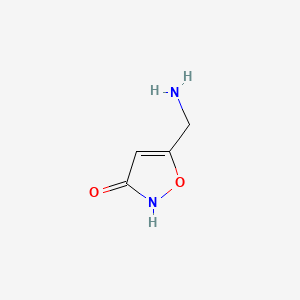
Muscimol
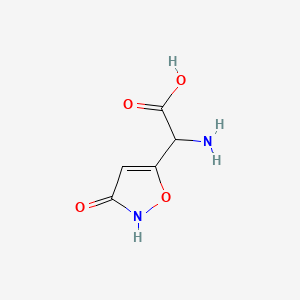
Ibotenic acid

Muscarine
photoproduct
Muscazone
A coupled excitatory–inhibitory system
The mushroom is neither a serotonergic “classic psychedelic” nor primarily muscarinic. Muscimol is a conformationally constrained analogue of GABA that binds the neurotransmitter’s orthosteric site on ionotropic GABAA receptors, including extrasynaptic receptor populations implicated in tonic inhibition. Ibotenic acid instead resembles glutamate and activates NMDA and several metabotropic glutamate receptors. Their co-presence provides a pharmacological basis for the characteristic alternation between activation and central nervous-system depression (Johnston, 2014; Michelot and Melendez-Howell, 2003).
Ibotenic acid can decarboxylate to muscimol through heat, drying, storage, ultraviolet exposure and acidic conditions, but transformation is incomplete and context-dependent. Both are water-soluble; tissue, developmental stage, geography and handling alter concentrations. In one Japanese series the cap contained more ibotenic acid and muscimol than the base or stipe, while metabolomics likewise distinguished cap from stipe and soil contexts (Tsunoda et al., 1993a; Deja et al., 2014). Drying therefore changes the chemical ratio; it does not standardise a specimen or establish safety (Tsunoda et al., 1993b; FDA, 2024a).
What else is present?
Muscarine gave the mushroom—and later the muscarinic receptor family—its name after nineteenth-century isolation, but A. muscaria contains it only at trace levels compared with muscarinic Inocybe and Clitocybe poisonings. Pigments include muscaflavins and muscaurins. The fruiting body also concentrates vanadium in the unusual complex amavadin, alongside ergosterol, trehalose, amino acids, organic acids and other fungal metabolites. None has been shown to replace the ibotenic-acid/muscimol pair as the main explanation of the acute neuropsychiatric syndrome (Michelot and Melendez-Howell, 2003; Dushkov et al., 2023).
Pharmacological open questions
Human pharmacokinetics. Clinical literature is dominated by poison-centre reports, case series and old self-experiments rather than controlled modern studies. Renal excretion of active material makes ethnographic urine reuse pharmacologically plausible, but exact human conversion, bioavailability and dose–response remain poorly quantified.
Therapeutic translation. Muscimol is invaluable in neuroscience as a reversible circuit-inactivation tool; animal studies also examine pain, seizure and sleep pathways. These uses of a purified receptor agonist do not demonstrate that mushroom extracts treat insomnia, anxiety, depression or pain (Johnston, 2014; Ramawad et al., 2023).
Whole mushroom versus isolated muscimol. Commercial products often imply equivalence, yet ibotenic acid, muscazone, unidentified metabolites, contaminants and product adulterants change the exposure. Even an accurate muscimol assay cannot authenticate a whole-mushroom tradition or guarantee predictable phenomenology.
Tradition, ritual & cultural use
Oldest evidenced or proposed human use
Documented Stepan Krasheninnikov observed Kamchatka between 1737 and 1741; his posthumous Description of the Land of Kamchatka (1755) contains the earliest extensive, securely datable account of fly-agaric intoxication in the region. A shorter European account based on Philip Johan von Strahlenberg’s Siberian travels appeared in 1730/1736. The nineteenth- and early twentieth-century ethnographies of Bogoras and Jochelson then supplied detailed Chukchi and Koryak descriptions (Krasheninnikov, 1755; Bogoras, 1904–1909; Jochelson, 1905–1908).
Unproven No securely identified prehistoric residue currently demonstrates A. muscaria consumption. Mushroom-shaped petroglyphs, portable images and linguistic correspondences can motivate hypotheses, but morphology alone cannot identify a fungal species or an intoxicating practice. Claims of ten-thousand-year continuity should therefore be read as proposals, not archaeological dates.
Peoples and territories
The record forms a broad but discontinuous northern Eurasian arc. Northeastern accounts concern Koryak, Chukchi, Itelmen/Kamchadal, Even and Yukaghir settings; western Siberian accounts include Khanty and Mansi communities of the Ob basin. Reports also describe Russian settler adoption and exchange networks. “Siberian use” must not flatten these differences: in some settings the mushroom belonged especially to diviners or shamans; elsewhere householders, guests or work parties also used it for celebration, endurance, singing or intoxication (Saar, 1991a; Nyberg, 1992).
Preparation as social technology
Historical reports mention fresh or dried fruiting bodies, infusions or mixtures with liquids, but there was no pan-Siberian recipe. More distinctive is secondary ingestion through urine, documented in parts of northeastern Siberia. Because a proportion of active isoxazoles is excreted, this practice could extend a scarce commodity and alter the metabolite profile. Yet it was also a relationship among bodies, ranks and resources: later retellings that describe a purely efficient “human filter” erase the economic and social organisation recorded by observers (Saar, 1991a; Michelot and Melendez-Howell, 2003).
Role in shamanism and healing
Fly agaric could facilitate diagnosis, foreknowledge, communication with non-human agents, retrieval of lost persons or objects, and a healer’s journey. In other episodes it amplified drumming, dance, epic recitation or collective festivity. The pharmacological event was framed by specialist knowledge, sung narrative and public interpretation: bodily tremor might evidence an arriving spirit; involuntary movement might be understood as the mushroom’s command. It was one technique among fasting, drumming, sleeplessness, costume and inherited vocation—not the universal source of “Siberian shamanism” (Nyberg, 1992).
Colonial conditions and evidentiary limits
Most canonical descriptions were written by outsiders during Russian imperial consolidation and missionary pressure. They preserve observations that might otherwise be lost, but translate local categories into “intoxication”, “superstition” and “shamanism”. Practices could also be concealed, abandoned, revived or altered after the spread of vodka and Christianisation. A responsible history keeps the observer, date, people and location attached to each claim rather than compiling them into a timeless mushroom religion.
Cosmology & key terms
- Wapaq
- A Koryak term commonly transcribed for fly agaric and/or its spirit-persons. Jochelson’s texts treat the mushrooms as agents with speech and intention; spelling varies across transliteration systems.
- Big Raven
- Koryak culture hero, creator and trickster, rendered by Jochelson through names such as Big-Raven or Quikil/Quikinnaqu. In a recorded cycle, a supreme being creates wapaq so Raven can recover the force needed to move Whale.
- Vahiyinin
- Jochelson’s transcription, often glossed “Existence”, for the being whose spittle becomes fly agarics in the Raven narrative. It is a source-specific name, not a pan-Siberian deity.
- Mukhomor
- Russian “fly-killer/fly agaric”, linking the mushroom to vernacular insect control. The word later enters settler, ethnographic and commercial vocabularies.
- Mushroom persons
- Visionary agents described as numerous, embodied and directive. Their shapes and movements can mirror the basidiocarp: low neck, cylindrical body, swift or repetitive locomotion.
- Urine circulation
- A pharmacologically intelligible practice that was also a material economy. Retellings about reindeer, elite consumers and poorer secondary drinkers are not equally documented in every people or period.
Personhood, command and mimicry
Koryak and Chukchi sources repeatedly describe the mushroom not as a passive chemical but as a population of beings. Intoxicated people may enact their morphology—crouching, drawing in the neck, bursting upward—or obey an instruction attributed to them. This is more specific than saying “the mushroom was sacred”: the form of the fruiting body, the multiplicity of mushrooms and the automatisms of intoxication become a local theory of agency (Bogoras, 1904–1909; Jochelson, 1905–1908).
> spirits of fly-agaric, who are supposed to have no necks or legs, but stout cylindrical bodies which move about swiftly — Bogoras (1904–1909, p. 206), describing Chukchi mimicry. Capitalisation modernised; quoted wording retained.
Major historical identifications
Visionary phenomenology
Fly-agaric experience is best described as an unstable oneirogenic and deliriant-like intoxication with dissociative, sedative and stimulant phases—not as a red-capped substitute for psilocybin. Ethnographic accounts and clinical cases overlap in altered scale, motor compulsion, personified figures, dream immersion and amnesia, but they answer different questions. A hospital record observes toxidrome; a Koryak narrative recognises visitors, commands and powers. Neither should erase the other.
Temporal profile
| Phase | Typical interval | Reported character | Caveat |
|---|---|---|---|
| Onset | ~30–120 min | Nausea, warmth, dizziness, salivation, twitching, restlessness or drowsiness | Commercial products may contain other drugs; raw fruiting bodies vary widely. |
| Escalation / peak | ~1–3 h | Ataxia, excitation, euphoria or fear, confusion, altered scale, repetitive movement, auditory/visual phenomena | Excitation and depression may alternate rather than form a smooth arc. |
| Main intoxication | ~4–8 h | Dreamlike scenes, spirit-person encounters, disorientation, sleep, stupor or episodic arousal | Clinical reviews report a broader 5–24 h range (Satora et al., 2005; Ordak, 2026). |
| After-phase | Up to 24 h; rarely longer | Sleep, fatigue, headache, patchy memory; occasionally prolonged confusion or psychosis | Multi-day cases are atypical and require clinical evaluation. |
Recurrent experiential structures
Intensity and variability
Intensity does not track the number or size of caps reliably. Concentration differs by lineage, specimen, tissue, developmental stage and treatment; ibotenic acid and muscimol also pull neural activity in different directions. Set and setting shape whether ambiguous presence becomes a spirit encounter, fairy-tale imagery, panic or clinical delirium, but cultural framing does not cancel toxicological risk. In a five-person case series, four reported visual and auditory hallucinations while one lost consciousness after the same social episode (Satora et al., 2005).
Salient anecdote
Bogoras’s Chukchi example is phenomenologically dense because perception becomes performance: one person pushed his head against the floor as if a mushroom were breaking through earth; another tucked in his neck, denied having a head and moved rapidly with swinging arms. The episode describes identification with a mushroom body, not merely seeing one (Bogoras, 1904–1909, p. 206).
Contemporary status
Conservation and biological movement
| Global condition | NatureServe G5 (Secure); widespread and often abundant in native temperate and boreal forests. No global IUCN assessment located. |
| Primary dependency | Living ectomycorrhizal host trees. Local fruiting reflects host continuity, soil and weather more than collection of individual mushrooms. |
| Introduced range | Multiple Southern Hemisphere introductions, largely associated with European pine forestry. Host shifts into native Nothofagus and Quercus systems make the fungus a conservation concern rather than a harvest-sensitive rarity. |
| Research priority | Map lineage identity and below-ground spread, not only conspicuous fruiting bodies; test competitive effects on native ectomycorrhizal networks (Vargas et al., 2019; Giles et al., 2025). |
Contemporary economies and “legal psychedelic” branding
A transnational market now sells dried caps, powders, tinctures, standardised extracts, chocolates, gummies and vapes. Products are promoted for sleep, anxiety, pain, mood or “microdosing”, often by analogy with psilocybin even though receptor pharmacology and acute risk differ. A 2023 online survey documents self-therapeutic motives but is self-selected, retrospective and chemically unverified; it cannot establish efficacy or incidence (Ordak et al., 2023). Wild collection also breaks the normal visual link between specimen, habitat and identity.
The product category may be only nominally Amanita. In a 2024 Virginia investigation, five gummy brands were analysed and three contained undisclosed psilocybin or psilocin; one “Amanita” product also contained DMT, caffeine and mitragynine. The test library could not determine muscimol or ibotenic acid, so the finding demonstrates label opacity rather than a universal absence of fly-agaric constituents (Michienzi et al., 2024).
Regulatory status
| Jurisdiction | Position | Practical reading |
|---|---|---|
| International | A. muscaria, muscimol and ibotenic acid are not listed in the schedules of the 1971 Psychotropic Convention. | Absence from treaty schedules does not override food, poison, medicine or national psychoactive-substance law. |
| United States — federal | Not scheduled under the Controlled Substances Act. FDA concluded in December 2024 that the mushroom, extracts, muscimol, ibotenic acid and muscarine are not authorised conventional-food ingredients and do not meet the GRAS standard. | “Unscheduled” does not mean lawfully marketable as food or proven safe (FDA, 2024a; FDA, 2024b). |
| Louisiana | R.S. 40:989.1 covers material or preparations intended for human consumption containing listed hallucinogenic plants, including A. muscaria; aesthetic, landscaping and decorative cultivation is excepted. | Intent and product form matter; this is stricter than federal scheduling. |
| United Kingdom | Not named in the Misuse of Drugs schedules, but the Psychoactive Substances Act 2016 can apply to production, supply, import or export of psychoactive products. | Ordinary possession outside custody is not the Act’s central offence; commercial conduct is the larger exposure. |
| Australia | Muscimol appears in Schedule 9 of the Poisons Standard. | State and territory implementation varies, but Schedule 9 is a prohibited-substance category outside approved medical/scientific contexts. |
Legal status changes and depends on product, intention and jurisdiction. This table is a research orientation, not legal advice.
Public-health signal
FDA’s 2024 review found no accepted conditions of safe use in conventional food. In April 2026, CDC reported 180 moderate or major illnesses associated with Diamond Shruumz and other mushroom chocolates during 2024: 73 hospitalisations, 38 intensive-care admissions, 29 intubations and two deaths. Testing found variable combinations of muscimol, psilocin, kavalactones, acetylpsilocin, pregabalin and other substances; the outbreak therefore cannot be attributed to A. muscaria alone (Rumph et al., 2026). That distinction is scientifically essential and does not lessen the product-safety failure.
Patents and enclosure
- US8784835B2. — “Method for producing muscimol and/or reducing ibotenic acid from Amanita tissue” claims processing and supplement applications.
- WO2022187974A1. — “Processes for extracting muscimol from Amanita muscaria” claims liquid and powder extraction processes intended to increase muscimol and decrease ibotenic acid.
- WO2023015395A1. — Claims A. muscaria extracts, compounds and proposed beneficial or therapeutic uses.
- WO2024173903A1. — Claims kilogram-scale mushroom extracts, biomass selection and finished products.
These documents demonstrate commercial positioning around purification, standardisation and health claims. Grant, application or publication of a patent does not establish clinical efficacy, regulatory approval, freedom from prior art or product safety.
Latest research
Nickles et al. (2026) sequenced 24 genomes across hemispheres, traced South African populations to a European lineage and found the ibotenic-acid biosynthetic gene cluster and most specialised-metabolite families conserved after introduction. The result joins invasion biology to chemical ecology.
A narrative review collates the expanding intentional-use literature and severe case reports, while CDC’s outbreak analysis supplies a large product-associated surveillance series. Both emphasise that authentic mushroom intoxication and adulterated-edible exposure must be separated analytically (Ordak, 2026; Rumph et al., 2026).
Extract work in a human microglial cell line found potentiation of a dsRNA-activated inflammatory response, possibly involving trehalose—not evidence of an anti-inflammatory medicine. A preclinical meta-analysis of muscimol for nerve-injury pain likewise concerns experimental delivery and animal models, not retail mushroom products (Wagner et al., 2023; Ramawad et al., 2023).
No robust randomised clinical trial demonstrates A. muscaria or commercial muscimol products as treatments for insomnia, anxiety, depression, pain or substance use. Analytical authentication, pharmacokinetics and controlled safety studies remain prior questions.
Bibliography
Archaeology & history
Botany & taxonomy
Chemistry & pharmacology
Conservation & ecology
Ethnography, ritual & cosmology
Law, policy & patents
Toxicology & safety
Cross-correlations
| Kingdom / ecology | Fungi · ectomycorrhizal ⇌ unlike cultivated saprotrophic Psilocybe, fly agaric depends on living host trees |
| Compounds | Muscimol · ibotenic acid ⇌ GABA/glutamate system, not the 5-HT₂A pathway of psilocybin, DMT or mescaline |
| Regions | Boreal and temperate Northern Hemisphere · introduced Southern Hemisphere forestry landscapes |
| Cultural complexes | Koryak–Chukchi and wider Siberian use ↳ proposed, not established, relation to the Soma–Haoma complex |